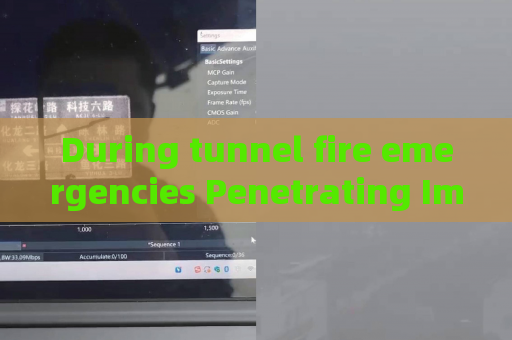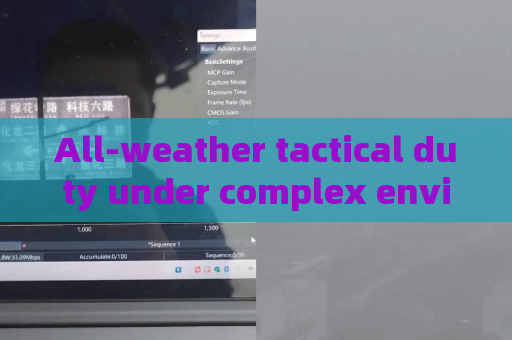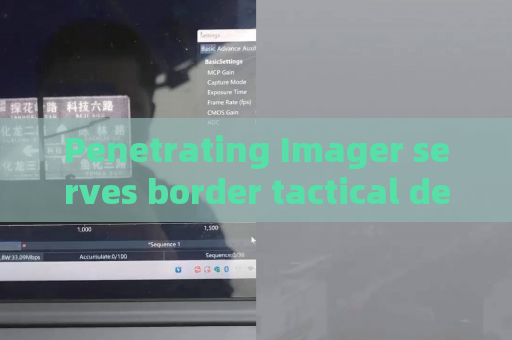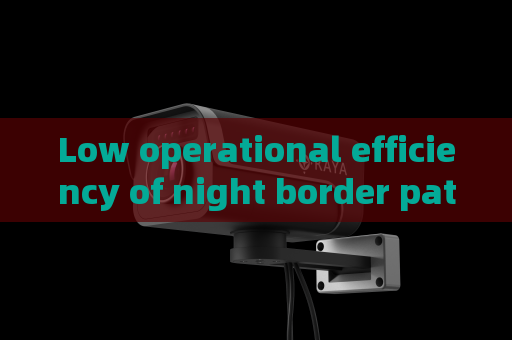
Border checkpoint duty under foggy low visibility, Penetrating Imager adopts Fog Penetration Imaging to sustain continuous monitoring Foggy low visibility at a border checkpoint creates a specific operational problem. Fog droplets scatter and absorb light, producing severe backscatter that washes out camera contrast. Approach lanes, vehicle outlines, plate characters, and cabin silhouettes can vanish at the exact moment officers require persistent visual coverage. Standard visible-light cameras either darken, bloom, or return grey fields with no reliable detail. Officers may slow traffic, close lanes, or send personnel forward on foot, which increases exposure, delays legitimate travelers, and creates gaps that smugglers or unauthorized entrants can exploit. Continuous monitoring is the core requirement at a border checkpoint, yet fog turns it into a stop-start process. Every minute of degraded vision is a minute of reduced screening capacity. The Penetrating Imager addresses this gap by using optical gating to preserve observation when fog reduces visibility. Penetrating Imager is an advanced optical imaging instrument that relies on laser range-gated imaging, also called gated imaging. It uses a high-repetition-rate pulsed laser, an image-intensified gated camera with an MCP image intensifier, high-voltage module, timing module, beam expander, and imaging lens. As an active imaging system, it illuminates the scene with short laser pulses and opens the camera gate only for the brief interval when light returns from a selected distance. This design provides high-contrast imaging, long operating range, high resolution, strong anti-interference capability, and effective suppression of backscatter. For checkpoint operations in fog, the relevant function is Fog Penetration Imaging. The gate rejects most light scattered by fog droplets and accepts light returning from vehicles, lane structures, and glass surfaces at the chosen depth. The result is clear imaging through fog, haze, rain, and snow. The instrument is limited to optical media such as vehicle windows, high-speed rail windows, aircraft windows, and glass curtain walls. It does not penetrate non-transparent solid materials. At a fog-bound checkpoint, the imager can be mounted on a fixed tower, overhead gantry, or mobile response vehicle and connected to the monitoring console. Operators align the optical axis with approach lanes and set the range gate to match typical vehicle distances. The pulsed laser illuminates the lane; the gated camera captures only the returning light from that slice. Fog backscatter is largely excluded, so the display retains vehicle contours, lane markings, and window glazing instead of a white or grey blur. This supports continuous monitoring because the lane does not need to be closed merely to regain visual contact. Officers can track approaching traffic, observe vehicle cabins through glass, and spot irregular stops or door activity without stepping into the fog. The same optical channel can be adjusted as fog density changes, maintaining a stable visual picture for checkpoint decisions while physical inspection remains available when grounds exist. The operational value lies in sustained visual continuity rather than a single snapshot. Fog often shifts in banks, with visibility rising and falling across short distances. The timing module and high-repetition-rate laser allow rapid gate adjustment, while the MCP image intensifier strengthens weak returns from distant targets. Operators can widen coverage to monitor multiple lanes or narrow the field for a through-glass check on a selected vehicle. Penetrating Imager therefore supports checkpoint monitoring in fog by keeping the observation loop active: approach, identification, anomaly detection, and response. It does not replace officers or physical searches, and its capability remains limited to optical media. Its role is precise and lawful: optical imaging through fog and transparent surfaces, with Fog Penetration Imaging maintaining continuous monitoring when ordinary cameras fail. This sustained visual layer helps maintain lawful flow while preserving officer safety. In that narrow but critical mission, Penetrating Imager provides a reliable visual layer for checkpoint security.