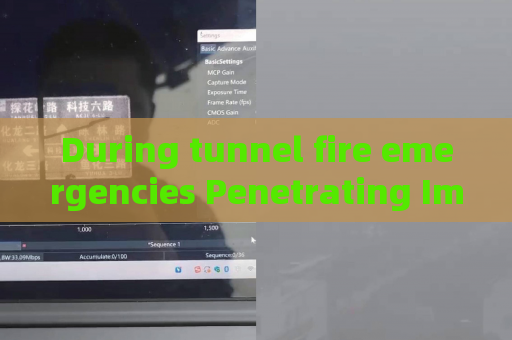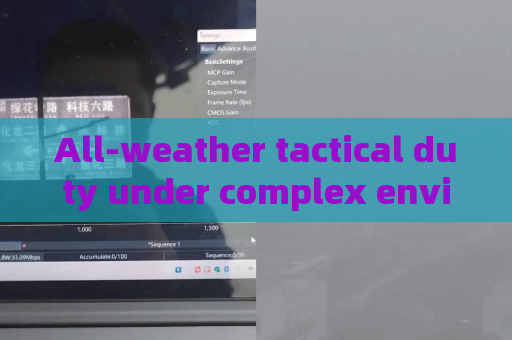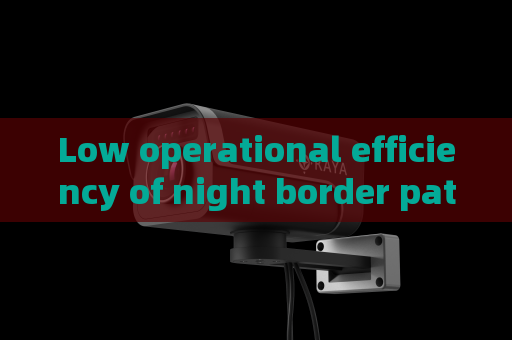
Penetrating Imager serves border tactical defense, adopts Zero-light Imaging to improve remote surveillance capability At a remote border corridor, the tactical problem is not simply seeing a target. It is maintaining continuous observation across dark terrain, fog banks, rain, snow, and vehicle glazing without exposing patrol positions. Passive optical cameras lose contrast when ambient light falls to zero. Floodlights or visible searchlights can disclose an observation post and push smugglers or intruders to alternate routes. Long-range lenses collect weak returns and are easily degraded by atmospheric scatter. Checkpoint teams also face reflective and tinted vehicle windows, which hide cabin occupants, cargo, and hand movements at a distance. The result is late warning, incomplete identification, and increased risk during interception. A Penetrating Imager addresses this specific border tactical defense gap. The system is an advanced optical imaging instrument, not a device for opaque solid barriers or any tool outside the light spectrum. It supports this mission by improving visual reach in low-light and degraded conditions while remaining within optical limits. The relevant function is laser range-gated imaging, often described as gated imaging. The system combines a high-repetition-rate pulse laser, an image-intensified gated camera with an MCP image intensifier, high-voltage module, timing module, beam expander, and imaging lens. It is an active optical system. The laser sends short pulses toward a selected range. The camera opens its gate only for the brief return window from that range, rejecting most light scattered by fog, haze, rain, snow, and foreground clutter. This design produces high-contrast images with long range, high resolution, strong anti-interference, and effective backscatter suppression. Zero-light Imaging extends the same optical chain into conditions with no usable ambient light, allowing the operator to observe without broad area illumination. Through-glass imaging supports through-window tactical observation of vehicle cabins at border checkpoints. The capability is limited to optical media such as glass, vehicle windows, rain, fog, haze, snow, and similar transparent or scattering layers. Opaque solid barriers are not part of this optical application. In practical use, the system is mounted on a tower, vehicle, or tripod and aligned with a known crossing lane, trail, or checkpoint approach. The operator sets the range gate to the distance of the vehicle or personnel. The beam expander shapes the laser illumination, and the gated camera captures the returning optical signal. At night, the system can conduct through-glass surveillance of a stopped or slow-moving vehicle, revealing occupants, seat positions, and visible objects behind tinted windows. In fog, rain, or snow, the range-gated return suppresses much of the backscatter that washes out conventional optics, so remote surveillance capability remains usable at greater distances. The image can be viewed live, recorded for evidence, or passed to a command post. This supports tactical decisions: whether to challenge, divert, or stop a vehicle; whether movement is civilian or suspicious; and where to position patrol units. The operator does not need to switch to a non-optical sensor to perform this optical through-glass and low-light observation. The same scenario benefits from range slicing and image processing discipline. Multiple gate delays can isolate a vehicle cabin from background terrain, fence lines, or a distant ridge. Strong reflections from glass, wet road surfaces, or checkpoint lights can be managed through the active gated return and high-contrast intensification. Because the Penetrating Imager works only with light, its role is clearly bounded. It cannot operate through opaque solid media; its optical path is limited to glass and atmospheric obscurants, and it is not a substitute for devices that rely on other physical phenomena. Within its optical limits, it improves visual reach for night border observation, through-window tactical recce, and early warning at crossing points. The recorded sequence can be time-stamped, geo-referenced, and forwarded to a tactical operations center. Patrol commanders can compare the gated image with map data and optical watch tower cues, and direct interception teams along covered routes. The system does not replace human judgment; it sharpens the visual picture before a decision point. In darkness, bad weather, and glass barriers, that sharper picture reduces false alarms and avoids premature engagement.