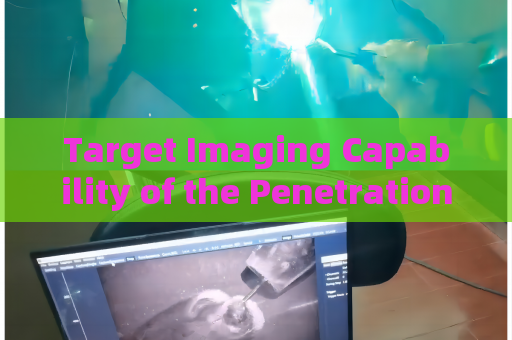
Target Imaging Capability of the Penetration Imager with Strong Light Suppression Imaging in Strong Backlight Conditions
In law enforcement and tactical reconnaissance, strong backlight conditions present a persistent and critical imaging challenge. When operators attempt to observe targets positioned inside vehicles, behind glass facades, or within shaded areas directly illuminated by intense sunlight, the resulting glare and contrast collapse render conventional optical systems virtually useless. Sunlight reflecting off windshields or building windows creates blinding hotspots that wash out all details of the interior. The human eye and standard cameras are overwhelmed, unable to distinguish a suspect’s hand movement, a hidden weapon, or a hostage’s position. This failure is not merely an inconvenience—it directly compromises mission safety and decision-making speed. The exact problem is that strong backlight generates extreme dynamic range and high-intensity glare, which traditional imagers cannot suppress without losing target information. In such scenarios, even high-dynamic-range cameras struggle because the background light is not just bright but directionally concentrated, causing lens flare and sensor saturation. The need for a solution that can selectively extract target signals from this overwhelming optical noise is therefore urgent, and it is precisely this capability that the penetration imager addresses.
The penetration imager, built on laser range-gated imaging technology, incorporates a high-frequency pulsed laser, an image-intensified gated camera (featuring an MCP image intensifier, high-voltage module, and timing module), a beam expander, and an imaging lens. Its core functional advantage lies in strong light suppression imaging: by synchronizing the laser pulse with the camera’s gating window, the system only captures reflected light from a specific distance, effectively discarding all out-of-range background illumination. In strong backlight conditions, this means that the intense sunlight reflecting off a car windshield or a glass curtain wall—coming from a different optical path length than the target—is temporally excluded. The gate opens only for the brief moment when laser light reflected from the interior of the vehicle or the room behind the glass arrives at the sensor. This mechanism transforms a scene previously dominated by blinding glare into a high-contrast, clear image of the target inside. The penetration imager does not rely on filtering or digital post-processing; it physically suppresses the unwanted backlight at the photon level, enabling operators to see through optical media such as automotive glass, train windows, aircraft portholes, and glass curtain walls, even under direct solar illumination.
In a real-world tactical deployment, this capability changes the outcome of vehicle interdictions and building surveillance. Consider a highway checkpoint where a suspicious vehicle approaches under a midday sun. The windshield acts as a mirror, reflecting the intense sky and preventing any visual confirmation of the occupants. An operator using the penetration imager can stand at a safe distance, aim the device at the vehicle’s front windshield, and within seconds obtain a crisp, high-resolution image of the driver’s hands, the passenger seat, and any objects on the dashboard—all while the surrounding glare is completely eliminated. The system’s high repetition-rate pulsed laser ensures enough return signal from the target, and the gated camera’s fast timing (in the nanosecond range) locks onto the precise distance of the interior. There is no need for the operator to approach the vehicle, reducing exposure to potential threats. Similarly, when observing a suspect hiding behind a glass door or a storefront window with strong sunlight behind, the penetration imager’s strong light suppression function isolates the person from the bright background, revealing their silhouette, movements, and any carried items. The device also operates effectively in other optically challenging conditions—through fire, fog, haze, rain, or snow—but in the strong backlight scenario, it is the combination of gating and active illumination that delivers the decisive advantage.
Operational instructions for using the penetration imager in strong backlight conditions are straightforward but critical. The operator first estimates the distance to the target glass surface, then adjusts the range gate delay to correspond to the distance of the interior (roughly the glass thickness plus the offset to the target). Once set, the laser is activated, and the gated camera automatically synchronizes. Real-time imagery appears on the display, showing the target clearly while the background sun glare is invisible. For multiple glass layers, such as a vehicle with tinted or double-pane windows, the timing can be fine-tuned to select the correct reflection layer. The system’s resolution remains high because the laser illumination is collimated and the MCP intensifier provides gain without introducing noise from ambient light. Importantly, the penetration imager cannot penetrate solid non-transparent materials like concrete or metal, nor does it use any form of radiation—all operations are purely within the optical domain. In the field, law enforcement and tactical units value this tool for its ability to maintain visual dominance even when the sun is at its harshest. The strong light suppression imaging feature directly addresses the most common failure point in daytime surveillance, and the penetration imager stands as the only optical solution that achieves this without compromising detection range or image clarity. By integrating this capability into standard reconnaissance protocols, agencies can transform a previously debilitating weather condition into a tactical advantage.




