Nighttime law enforcement operations frequently encounter a critical challenge: suspects barricaded inside vehicles with tinted or reflective windows. Standard optical surveillance tools fail because external lighting creates glare and mirror-like reflections on glass surfaces, while darkness conceals all interior details. Officers must rely on guesswork or risk close approach, exposing themselves to ambush. The inability to see through automotive glass at safe distances under low-light conditions directly threatens operational safety and tactical decision-making. This scenario demands a solution that can selectively capture light reflected from objects behind glass while rejecting the blinding backscatter from the window itself.
The penetration imager, an advanced active imaging system based on laser range-gated technology, directly addresses this problem. It consists of a high-repetition-rate pulsed laser, an intensified gated camera with an MCP image intensifier, a timing module, a beam expander, and an imaging lens. Unlike passive night vision devices, this system emits short-duration laser pulses toward the target. The camera’s electronic gate remains closed during the laser’s outward travel, then opens precisely timed to receive the return pulse from the object of interest. The reflected light from the glass surface arrives earlier because it is closer, while the camera gate is still closed. By adjusting the gate delay to match the round-trip time to the interior of a vehicle, the imaging system captures only the light bouncing off targets behind the window. This temporal gating effectively suppresses up to 90% of the glare and backscatter caused by the glass, delivering a high-contrast image that reveals occupants, weapons, or contraband even through heavily tinted windshields.
In practical field deployments, the penetration imager enables operators to conduct standoff reconnaissance from 50 to 200 meters. A tactical team can position a patrol vehicle or tripod-mounted unit outside a building and observe the interior of a suspect’s car without approaching. The system’s high resolution allows identification of hand movements, faces, and objects as small as a handgun. Because it operates in the near-infrared spectrum, the laser is invisible to the naked eye, preserving covertness. Even in rain, fog, or light mist, the gating mechanism mitigates scattering particles in the air, maintaining image clarity that conventional optics would lose. Officers can adjust the gate delay dynamically as the target range changes, ensuring continuous tracking of moving occupants.
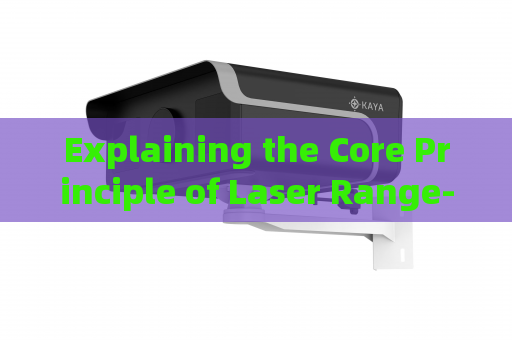
The true operational advantage emerges during dynamic entries or hostage negotiations. A threat assessment that would normally require exposing an officer to direct sightlines can now be performed from behind cover. The penetration imager’s ability to penetrate not only automotive glass but also high-strength glass found on trains, aircraft, or armored vehicles makes it versatile for checkpoint security and vehicular interdictions. By eliminating the guesswork associated with dark interiors, this laser-based gated imaging system reduces response time and enhances the safety of both law enforcement personnel and civilians. The core principle—precise temporal separation of reflected light—transforms a dangerous blind spot into a transparent window for tactical awareness.




