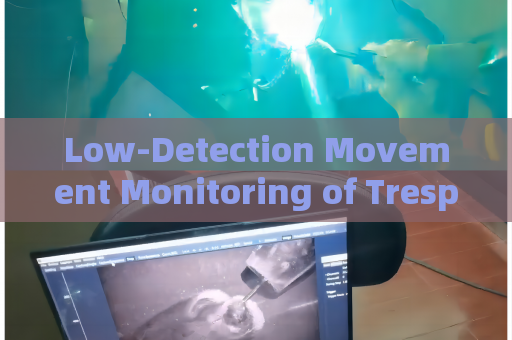
Low-Detection Movement Monitoring of Trespassers by the Penetration Imager with Fog Penetration Imaging in Foggy Conditions The operational environment of perimeter security often presents the most challenging conditions for surveillance systems. Foggy weather, in particular, severely compromises conventional optical cameras and even thermal imagers, which rely on clear line-of-sight or temperature differentials that dissipate in mist. For law enforcement and asset protection teams tasked with monitoring restricted zones, the presence of dense fog reduces visibility to near-zero, rendering standard motion detection ineffective while simultaneously increasing the risk of false alarms triggered by drifting moisture. The requirement for low-detection movement monitoring—meaning the observer must remain undetected by the trespasser while capturing subtle, deliberate movement at a distance—adds an extra layer of difficulty. A fixed patrol or a vehicle-mounted camera cannot illuminate the area without giving away the surveillance position; any active light source would scatter off fog particles, producing blinding backscatter and alerting the intruder. The core pain point is therefore twofold: the need to see through the fog without revealing the observation post, and the need to detect slow, cautious footfalls or crawling motions that would be invisible to radar-based motion sensors. In this context, the penetration imager becomes the only viable tool that can meet both the optical and tactical demands of the mission. The penetration imager addresses this problem through its core technology—laser range-gated imaging, also known as gated imaging. Unlike floodlights or conventional searchlights that produce wide, continuous illumination and cause severe backscatter in fog, the penetration imager emits a high-repetition-rate pulsed laser beam that is precisely synchronized with an image intensifier camera. The timing module within the camera’s intensifier opens its electronic shutter only for the brief instant when the reflected laser pulse returns from the target, effectively rejecting all scattered light from fog particles between the imager and the subject. This gating mechanism produces a high-contrast image of the trespasser while the fog itself remains almost invisible in the frame. The system uses an intensified camera with a microchannel plate (MCP) and a high-voltage gating module, along with a beam expander and imaging lens, to achieve long standoff distances and high resolution. Because the illumination is pulsed and the receiver is blind to everything except the target-reflected pulse, the emitter’s location remains covert—no continuous beam broadcasts the observer’s position. The penetration imager therefore transforms what would otherwise be a blinding searchlight scenario into a stealthy, directional illumination that only the gated sensor perceives. This capability is exclusive to optical penetration and does not involve any radio waves, X-rays, or other non-optical mechanisms, strictly adhering to the physics of light. In practical deployment for low-detection movement monitoring, an operator positions the penetration imager at a fixed observation point—such as a rooftop, a treeline, or a vehicle turret—overlooking a known approach corridor that becomes fogged in during early morning hours. The system is operated in a passive-active hybrid mode: the imager remains in a low-power standby state until the operator initiates a short-duration laser pulse sweep. A typical sweep lasts only a few milliseconds, emitting several hundred laser pulses at a specific gate delay that corresponds to the distance of the suspected intrusion zone. Because the pulse repetition rate is high and the exposure time per gate is extremely short, the observer can scan a wide area in under a second without emitting a detectable glow to the naked eye or to night-vision devices that the trespasser might carry. The image captured on the operator’s monitor shows the trespasser as a clearly defined human silhouette against the faintly visible background of fog-obscured terrain, with motion artifacts minimized by the short exposure. The operator can then track the individual’s movement—crawling, crouching, or slow walking—without ever switching on a visible light or exposing the position. For law enforcement teams, this means that a single penetration imager can cover a half-kilometer stretch of fence line in zero-visibility fog, providing the same level of situational awareness that would normally require multiple ground patrols with powerful searchlights. The depth of this application extends to the precise calibration of the gate delay and pulse width based on the measured fog density. Thicker fog requires a narrower gate window to exclude even more near-distance scatter, while thinner fog allows a slightly wider window to improve depth of field. The operator adjusts the gating parameters in real time using the imager’s onboard control interface, which provides a live waveform of the reflected signal strength. In a typical scenario, a perimeter security officer might detect a slow-moving trespasser at 300 meters through a fog layer with visibility below 50 meters. The penetration imager’s laser, operating at a near-infrared wavelength, is invisible to the unaided eye and to most commercial night-vision goggles. The observer can therefore maintain continuous, covert monitoring of the intruder’s approach vector, speed, and group size—information critical for coordinating a silent interdiction. Because the imager only resolves objects within the gated range, background clutter such as blowing leaves or distant traffic is automatically filtered out, reducing false alarms that plague conventional motion detection systems. The entire operation remains within the optical domain: the laser pulse is a light-based signal, not a radio wave or sound wave, and the intensifier camera captures reflected photons through the scattered medium. This technological specificity ensures that the penetration imager fulfills its role as a low-detection, fog-penetrating surveillance tool without crossing into the prohibitive territory of wall-penetrating or ray-emitting devices.




