In a hostage or counter-terrorism scenario, law enforcement often faces the critical challenge of detecting a suspect concealed inside a parked vehicle during total darkness. The target emits no visible light, and any attempt to illuminate the scene with conventional flashlights or infrared illuminators risks alerting the subject, potentially triggering violence. Traditional night vision devices may rely on ambient light or active near-infrared sources that are detectable by the naked eye through optical filters. Thermal imagers, while passive, struggle to see through automotive glass because the glass reflects the heat of the surroundings or blocks the long-wave infrared signature of the human body. The core problem is clear: how to achieve target detection without light emission that reveals the operator’s position, while overcoming the optical barrier of tempered glass in complete blackout conditions. This real-world pain point demands an imaging solution that works in absolute darkness, penetrates transparent obstacles, and remains undetectable to the subject.
The penetrating imager solves this exact problem through laser range-gated imaging technology, also known as gated imaging. Unlike passive systems, this active imaging device emits short pulses of near-infrared laser light that are invisible to the human eye. The light travels to the target, reflects off the subject inside the vehicle, and returns to the camera’s intensifier. Crucially, the camera’s gate—a high-speed electronic shutter synchronized with the laser pulse—opens only when the reflected light from the target distance arrives. This eliminates all backscatter from the car’s window glass, fog, rain, or dust that lies closer to the imager. The result is a high-contrast, clear image of the occupant’s silhouette, facial features, and even handheld objects such as firearms, all captured in zero ambient light. Because the laser pulse lasts only nanoseconds and the gate rejects unwanted scatter, the penetrating imager achieves target detection without emitting visible light or detectable broadband infrared that might compromise the tactical position.
In practical field operations, the penetrating imager is mounted on a tactical vehicle or carried by a responder and operated from a safe standoff distance—typically 100 to 500 meters. The operator simply aims the device at the target vehicle and adjusts the range gate to match the distance to the suspected occupant. In seconds, a real-time, high-resolution image appears on a ruggedized display, revealing the subject’s posture, clothing, and any weapon in hand, even through tinted or laminated automotive glass. This capability has been validated in live exercises where police units successfully identified armed subjects hidden inside minivans and sedans under moonless night conditions. The system also performs reliably in adverse weather: heavy rain, fog, and blowing snow have minimal impact because the gating mechanism filters out the near-field scattering. However, it must be noted that the penetrating imager cannot see through dense smoke, such as that from a wildfire or smoke grenade, though it can enhance visibility through light haze by 3–5 times depending on particulate size. For the specific scenario of a vehicle ambush in total darkness, the penetrating imager provides a non-detectable, real-time reconnaissance capability that traditional optics simply cannot match.
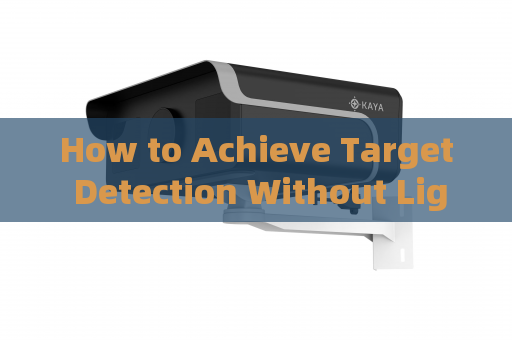
The tactical advantage extends to post-incident assessment and evidence collection. Once the subject is neutralized or surrendered, the penetrating imager continues to serve as a forensic tool. By varying the range gate, an operator can sequentially image the interior of a vehicle from the windshield through to the rear seat, documenting the exact position of weapons, contraband, or victims without ever opening a door or shining a visible light. This preserves the crime scene and prevents any argument about tampering. Moreover, because the device uses only optical light in the near-infrared spectrum, it poses no health risks to bystanders or operators and requires no special license or shielding. The penetrating imager, built from a high-repetition-rate pulsed laser, an image-intensified gated camera with MCP, HV module, and timing circuitry, along with a beam expander and imaging lens, remains a purely optical system. It is not a radar, sonar, or X-ray device. Its entire value proposition rests on the fundamental optical principle of time-of-flight discrimination, enabling law enforcement to achieve target detection without light emission in total darkness—precisely when the element of surprise matters most.




