In the dead of night, when ambient light is virtually nonexistent, law enforcement faces a critical blind spot: detecting illegal vehicles operating under total darkness. Traditional night vision devices—infrared illuminators, thermal imagers, or standard low-light cameras—struggle against tinted windows, heavy fog, or rain. Suspects often exploit these conditions to transport contraband, evade checkpoints, or conduct criminal activities. The core pain point is not simply darkness; it is the combination of zero-light environments with reflective or obscuring surfaces like vehicle windshields and side windows. Thermal imagers, for instance, detect heat signatures, but modern automotive glass with low-emissivity coatings can mask or distort thermal patterns. Meanwhile, active infrared systems suffer from severe backscatter when moisture or particulate matter is present, rendering the target indistinguishable. This gap leaves officers unable to verify the number of occupants, identify weapons or cargo, or even confirm whether a vehicle is stationary or moving—until it is dangerously close. The consequence is delayed response, increased officer risk, and missed interdiction opportunities in high-stakes scenarios such as border security, anti-smuggling operations, and nighttime patrols.
The penetrating imager directly addresses this challenge by employing laser range-gated imaging technology (gated imaging). Unlike passive systems, this active optical instrument fires high-repetition-rate laser pulses synchronized with an intensified gated camera. The camera's shutter opens only when the reflected laser pulse returns from the target, effectively slicing through optical media and rejecting backscatter. This design allows the penetrating imager to see through vehicle windshields and side windows—even heavily tinted or laminated glass—under pitch-black conditions. The system comprises a pulsed laser, an image intensifier with microchannel plate (MCP), a high-voltage module, a timing module, a beam expander, and an imaging lens. Because it relies solely on light (not X-rays, radio waves, or ultrasound), it operates within the optical spectrum and offers high contrast imaging at long range with strong anti-interference capabilities. In total darkness, the penetrating imager produces clear, real-time video of occupants, objects, and activities inside a vehicle, overcoming fog, rain, haze, or smoke that would blind conventional cameras. The technology does not penetrate walls, concrete, or metal—it is strictly limited to optical media such as automotive glass, aircraft windows, and glass curtain walls. This functional boundary ensures compliance with legal and safety standards while delivering the precise capability needed for roadside vehicle inspection.
In field operations, the penetrating imager is typically mounted on patrol vehicles or carried as a handheld unit. An officer activates the system from a safe standoff distance—often 50 to 200 meters—and instantly obtains a clear view of the vehicle interior. The zero-light imaging capability eliminates the need for any external illumination that would alert suspects. The operator can count passengers, observe hand movements, identify weapons or contraband, and assess driver behavior without approaching the vehicle. This dramatically reduces the element of surprise for criminals and lowers the risk of ambush. For example, during a nighttime checkpoint in a rural area with no street lighting, the penetrating imager reveals whether a driver is concealing a firearm under a jacket or whether a backseat passenger is holding an object wrapped in dark fabric. The system's laser range gating also allows selective focusing: the operator can set the gate to capture only the vehicle's cabin, ignoring reflections from rain or dust between the imager and the target. In total darkness, the penetrating imager delivers actionable intelligence that was previously impossible to obtain, enabling proactive rather than reactive enforcement.
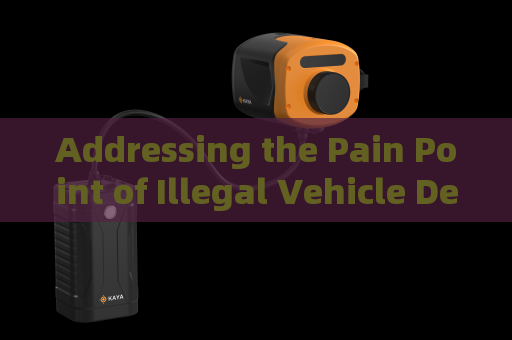
Further operational details reinforce the penetrating imager's role in illegal vehicle detection. The device operates in real time, displaying video on a ruggedized tablet or helmet-mounted display. Its high-repetition-rate laser (typically tens of kilohertz) ensures flicker-free imagery even when the target is moving. The gated camera's microchannel plate provides image intensification up to 10,000 times, while the timing module compensates for varying target distances. For zero-light scenarios, the penetrating imager does not rely on ambient starlight or moonlight—it is a fully active system. This means performance remains consistent whether the vehicle is parked under a dense tree canopy or moving through a tunnel. The ability to see through fog or light smoke (improving visibility by 3–5 times in fire-related haze, though not effective in thick smoke) adds resilience in adverse weather. Law enforcement agencies report that after adopting the penetrating imager, nighttime arrest rates for vehicle-based crimes increase significantly because officers no longer need to close the gap to physically inspect windows. Instead, they maintain tactical advantage and officer safety while making informed decisions. The penetrating imager transforms total darkness from a liability into an operational opportunity, ensuring that no illegal vehicle remains hidden simply because the lights are out.




