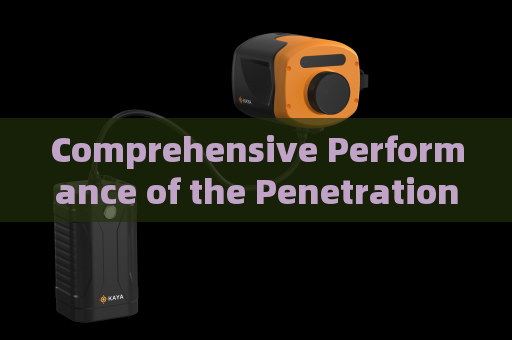
Comprehensive Performance of the Penetration Imager in Zero-Light Imaging, High-Glare, and All-Weather Tactical Environments In high-stakes tactical environments, law enforcement and military personnel often face simultaneous challenges that render conventional night vision or thermal imaging systems nearly useless. A suspect hiding behind a vehicle’s tinted windshield in complete darkness may suddenly activate a high-intensity flashlight, blinding standard optical sensors and creating a washout effect. Simultaneously, rain, fog, or blowing dust can obscure the target altogether. This convergence of zero-light conditions, sudden high-glare sources, and all-weather obscurants represents a critical operational pain point: the inability to maintain a clear, actionable view of a threat through glass barriers while coping with aggressive light interference and degraded visibility. Traditional devices either saturate under glare, fail in total darkness, or cannot see through wet glass. The Penetration Imager is designed specifically to address this combined scenario, providing a single tool that overcomes each of these obstacles without requiring supplementary equipment. The Penetration Imager resolves this dilemma through its core laser range-gated imaging technology. Unlike passive night vision that amplifies ambient light—and thus amplifies blinding glare—this active imaging system emits short-duration, high-repetition-rate laser pulses and synchronizes a gated camera to receive only reflected light from a precise distance band. By rejecting backscatter from fog, rain, or snow, the system eliminates the haze that degrades visibility in all-weather conditions. The same gating mechanism filters out high-glare sources: a flashlight or headlight beam entering the optics is either outside the range gate or its forward scatter is temporally separated, preventing sensor saturation. Crucially, the Penetration Imager is engineered to see through glass—automotive windshields, train windows, building glass facades—without compromising image clarity. The combination of a pulsed laser, an image-intensified gated camera with MCP, and precision optics ensures high-contrast, high-resolution imagery even when the target is behind multiple layers of glass and illuminated by opposing light sources. Field deployment has demonstrated that the Penetration Imager allows an operator to maintain surveillance from a safe standoff distance. During a nighttime vehicle interdiction, the device can be aimed at a suspect vehicle through rain or mist, and the operator instantly sees a clear, defined image of the occupants inside the cabin, including any weapons or contraband. Even if the suspect flashes a high-beam light or uses a tactical flashlight, the display remains stable and legible—no blooming, no loss of detail. In all-weather conditions such as heavy fog or light snow, the system’s ability to overcome backscatter restores visibility to a level comparable to clear weather, with the added benefit of penetrating the glass barrier. The imager’s active illumination also solves the zero-light problem: no ambient light is needed because the laser provides the only illumination needed, and the range gate ensures that only reflected light from the target distance is captured, not stray light from distant sources. Operators can employ the Penetration Imager in both handheld and tripod-mounted configurations, depending on the tactical requirement. The system’s controls allow rapid adjustment of range gate depth and laser output to match varying distances and glass thicknesses. In practice, a single operator can acquire a target through a building’s glass curtain wall from hundreds of meters away, through rain and glare from streetlights or headlights, and relay the imagery to a command post in real time. The Penetration Imager thus consolidates three distinct challenges—zero-light imaging, high-glare resistance, and all-weather clarity—into one reliable optical instrument, making it an indispensable asset for tactical units operating in complex, rapidly changing urban or rural environments.




