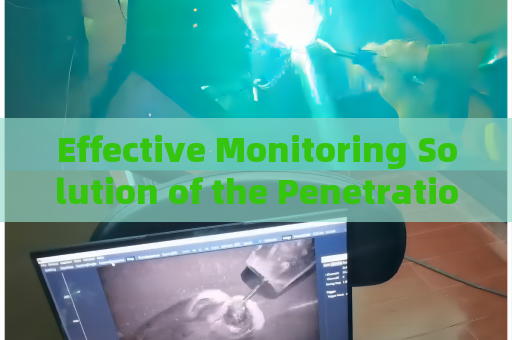
Effective Monitoring Solution of the Penetration Imager with Strong Light Suppression Imaging in High-Glare Coastal Environments Coastal environments present unique challenges for optical surveillance and monitoring. Direct sunlight reflecting off water surfaces, combined with glare from wet sand, docks, and marine infrastructure, creates extreme contrast conditions that overwhelm conventional cameras. In law enforcement maritime patrols, search and rescue operations, or port security, officers often face situations where critical targets—such as a distressed swimmer, a suspicious vessel, or an individual on the shore—are completely washed out by blinding reflections. Standard imagers struggle to maintain visibility, resulting in missed detections or delayed responses. The penetration imager addresses this precise pain point by leveraging active laser range‑gated technology to cut through high‑glare environments and deliver clear, actionable imagery where passive systems fail. The core capability enabling this solution is strong light suppression imaging. A penetration imager emits high‑repetition‑rate laser pulses toward the target area while synchronizing an intensified gated camera to open its shutter only during the precise time window when the reflected laser light returns from the intended distance. This gating mechanism effectively rejects ambient sunlight, surface reflections, and other stray light sources that occur outside the selected range window. In high‑glare coastal settings, the system’s ability to suppress background illumination by several orders of magnitude allows operators to see through the blinding veil of water glare and capture high‑contrast images of subjects even under direct sunlight. Because the penetration imager is an active imaging system, it maintains long‑range performance and high resolution unaffected by the harsh coastal light conditions. Field deployments in port security and coastal patrol operations demonstrate the practical advantage. When monitoring a pier with strong afternoon sun reflecting off the water, a traditional thermal or day‑light camera shows a washed‑out scene with virtually no detail on the far side of the glare zone. Using the penetration imager, an operator can clearly distinguish the silhouette and movements of a person standing near the waterline, identify the markings on a small boat, or even read the registration number on a vessel through a dirty windshield. The ability to penetrate optical media such as glass windows is especially valuable—suspicious activity inside a vehicle parked near the coast can be observed without the driver noticing any illumination. The system’s compact design, comprising a pulsed laser, intensified camera, beam expander, and imaging lens, allows mounting on patrol boats, drones, or tripods for fixed surveillance. For tactical use in emergency response, the penetration imager offers a decisive edge during high‑glare coastal operations. Search teams scanning a sandy shoreline for missing persons can cover wide areas while the strong light suppression mode automatically adjusts to shifting sun angles. During maritime law enforcement intercepts, the device enables officers to maintain visual contact with a target vessel without being blinded by its own deck lights reflecting off the water. The penetration imager’s performance in fire‑affected coastal scenarios—such as burning docks—further enhances visibility by three to five times compared to conventional optics, though it remains ineffective against dense smoke. Overall, this monitoring solution fills a critical gap by turning the most challenging glare‑dominated coastal environments into fully observable operational spaces.




