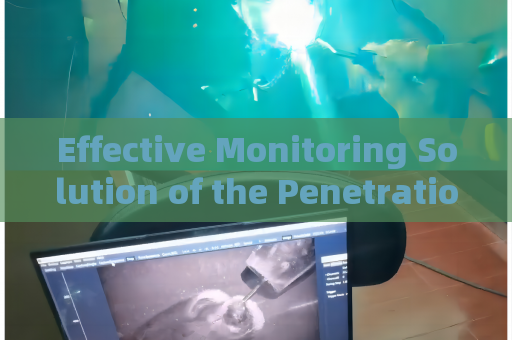
Effective Monitoring Solution of the Penetration Imager with Strong Light Suppression Imaging in High-Glare Coastal Environments Coastal environments present a unique set of surveillance challenges, particularly when glare from direct sunlight, reflected off water surfaces or wet sand, overwhelms conventional optical systems. Along busy harbors, maritime borders, or during coastal patrol operations, operators often struggle to identify small vessels, drifting objects, or individuals in distress due to intense solar reflections that cause blooming, washout, and complete loss of image detail. This high-glare condition is a persistent operational pain point for coast guard and law enforcement teams who rely on real-time visual monitoring to detect threats, conduct search and rescue, or intercept illicit activities. The inherent brightness of the coast—combined with unpredictable wave movement and shifting light angles—renders standard cameras ineffective, forcing personnel to reposition or wait for better lighting, which wastes critical time and compromises mission effectiveness. In such harsh optical environments, a solution that can maintain clear imaging despite extreme illumination is not a luxury but a necessity. The penetration imager, specifically designed to overcome these visual obstacles, directly addresses this dilemma. The penetration imager achieves strong light suppression imaging through its core laser range-gated technology, which actively controls the timing of illumination and sensor exposure. Unlike passive cameras that capture all ambient light including blinding glare, this active imaging system emits a high-repetition-rate pulsed laser and synchronizes an intensified gated camera to receive only the reflected light from the target distance, excluding the overwhelming background illumination. By precisely gating the sensor to open only when the laser pulse returns from the object of interest, the system effectively slices through the glare veil, capturing a high-contrast image of the target while suppressing scattered light and surface reflections. The built-in MCP image intensifier further enhances weak signals, ensuring that even partially obscured or distant subjects remain visible. This function is particularly vital in coastal scenarios where the sun’s reflection off water is not merely a nuisance but a tactical blind spot that can conceal approaching threats or drifting survivors. The penetration imager turns this challenge into an advantage, delivering crisp imagery in conditions where other optical tools fail. In practice, the penetration imager deployed along a coastline operates with remarkable reliability. For example, during a maritime interdiction operation, an operator positioned on a cliff or pier can scan a wide area of glittering sea surface and identify a small speedboat approaching at high speed, even when sunlight directly bounces off the hull and water. The system’s laser range-gating function automatically filters out the glare, presenting a clean, high-resolution silhouette on the display. Additionally, the imaging can penetrate airborne spray and light fog common near shorelines, maintaining visual clarity without degradation. The operator simply adjusts the gate delay to match the target distance, and the imaging system instantly locks onto the intended subject, ignoring the bright background. This eliminates the need for physical filters or frequent camera repositioning, allowing continuous monitoring without interruption. The strong light suppression capability ensures that critical details—such as the number of persons on board, the presence of illegal cargo, or distress signals—are captured accurately, even in the most glaring noon-day sun. The deployment of the penetration imager in high-glare coastal environments also enhances operational safety and decision-making speed. During search and rescue missions, for instance, rescuers can spot a person in the water amidst choppy, sunlit waves within seconds, whereas conventional binoculars or cameras would be blinded by the flickering reflections. The system’s ability to suppress glare while maintaining long-range detection means that aerial or shore-based monitoring teams can maintain a constant watch without ocular fatigue or missed targets. Moreover, the laser-based active imaging does not emit detectable radiation beyond the visible spectrum, making it suitable for covert surveillance operations where passive thermal or radar systems might be compromised. Over time, consistent use of the penetration imager in coastal patrol has demonstrated a marked reduction in false negatives caused by glare, directly improving interception rates and response times. This specialized imaging solution transforms a previously severe environmental limitation into a controllable parameter, proving itself indispensable for agencies tasked with safeguarding coastal waters against threats and emergencies.




