Border patrol and counter-smuggling operations face a persistent dilemma: how to observe suspects or illegal immigrants at extreme distances without tipping them off. Traditional optical tools—binoculars, spotting scopes, or even thermal imagers—fall short when the target remains inside a vehicle, behind tinted glass, or under camouflage netting. At ranges exceeding one kilometer, atmospheric haze, rain, and the reflective glare of windshields degrade image quality to the point of uselessness. Worse, any active illumination, such as a spotlight or IR laser designator, risks alerting the subject, triggering flight or destruction of evidence. The core pain point is not just seeing far, but seeing through a transparent barrier stealthily, at a standoff distance that keeps the observer safe and undetected.
This is where the Penetration Imager redefines the operational envelope. Built around laser range-gated imaging (also called gated imaging), the system employs a high-repetition-rate pulsed laser synchronized with an intensified gated camera containing an MCP image intensifier, high-voltage module, and timing controller. The key breakthrough lies in its ability to reject backscatter from fog, rain, or glass. When a short laser pulse illuminates the scene, the camera’s intensifier is activated only for a nanosecond window that matches the round-trip time of light from the target distance. Light scattered by intervening aerosol or reflected off the glass surface arrives earlier or later and is completely blocked. The result is a crisp, high-contrast image of the vehicle interior—occupants, gestures, even documents—without any visible flash or telltale beam. The system operates exclusively in the optical domain, using only light, and cannot penetrate walls, concrete, or any opaque solid. Its sole capability is to see through optical media such as automotive glass, aircraft windows, or glass curtain walls, while ignoring fire, mist, haze, rain, and snow.
In practical terms, a Penetration Imager mounted on a tripod or vehicle platform at a distance of 1.5 to 3 kilometers can acquire detailed imagery of a suspicious car, van, or bus without the occupants ever knowing they are being watched. The operator sees a real-time feed of the suspect’s actions—concealing contraband, swapping seats, discarding items—through the windshield or side windows, even under heavy rain or during a sandstorm. Unlike thermal cameras, which are often blinded by heated glass or require the subject to be outside the vehicle, the Penetration Imager captures full visual detail. Unlike active radar or acoustic devices, it emits no radio waves or ultrasonic signals that could be detected by electronic countermeasures. The stealth factor is absolute: the laser wavelength is outside the visible range, and the pulse duration is so brief that even an eagle-eyed observer inside the vehicle would perceive nothing but the natural ambient light.
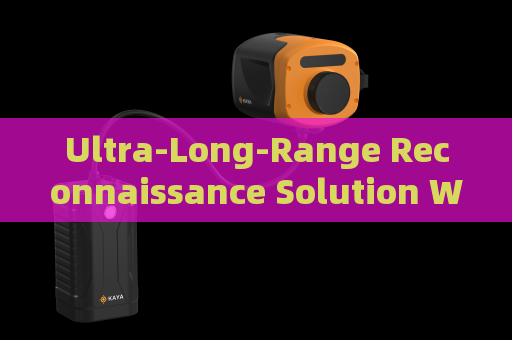
The system’s operation is straightforward yet powerful. After acquiring the target via a wide-field spotting scope, the operator zooms the imaging lens to the desired magnification, adjusts the gate delay to match the precise distance (measured by an integrated laser rangefinder), and fine-tunes the gain and pulse power. In dense fog or heavy smoke—where conventional optics see only whiteout—the Penetration Imager boosts effective visibility by three to five times, though it remains ineffective against thick, opaque smoke plumes. During night operations, the pulsed laser provides its own active illumination, eliminating the need for any external light source that might give away the observation post. Whether monitoring a remote border checkpoint, a smuggling route, or a maritime interdiction scenario, the Penetration Imager delivers ultra-long-range reconnaissance with zero collateral exposure, making it an indispensable tool for law enforcement and security forces that must see without being seen.




