Support of the Penetration Imager for Fire Rescue with Smoke Penetration Imaging When Fire, Smoke, and Extreme Heat Obstruct Vision
In fire rescue operations, the most critical moments often occur when visibility is entirely eliminated. Intense flames, thick layers of smoke, and blistering heat create an environment where conventional optical tools like flashlights or standard cameras become useless. Firefighters must navigate through unfamiliar, collapsing structures while searching for trapped victims and hidden fire sources. The blinding glare from flames and the swirling, opaque smoke not only delay rescue but also expose first responders to extreme danger. Every second of hesitation—every misstep into a void or a pocket of superheated gas—can cost lives. The fundamental problem is that human vision and ordinary imaging systems are helpless when fire, smoke, and extreme heat obstruct vision; what is needed is a device that can see through these hostile optical barriers without relying on thermal contrast or sound waves.
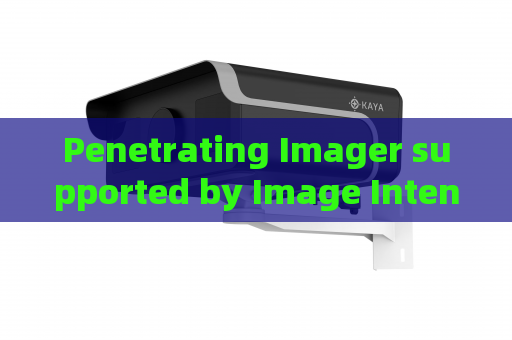
The Penetration Imager directly addresses this pain point through its laser range-gated imaging technology. Unlike passive thermal cameras that only highlight temperature differences and cannot penetrate smoke or glass, this active optical system emits high-repetition-rate laser pulses and synchronizes a gated intensified camera to capture only the light returning from a specific distance. By rejecting backscatter from smoke particles and heat shimmer, the Penetration Imager delivers sharp, high-contrast images even when flames and haze fill the air. Critically, the technology is designed to see through optically transparent barriers such as glass windows, aircraft portholes, and building facades, while simultaneously overcoming the distorting effects of fire and hot air turbulence. In a fire scene, the device can improve visibility by three to five times compared to the naked eye, cutting through the glare of flames and the haze of moderate smoke. It does not rely on any form of radiation or ultrasound—only light, precisely gated to avoid the blinding reflections that plague conventional cameras.
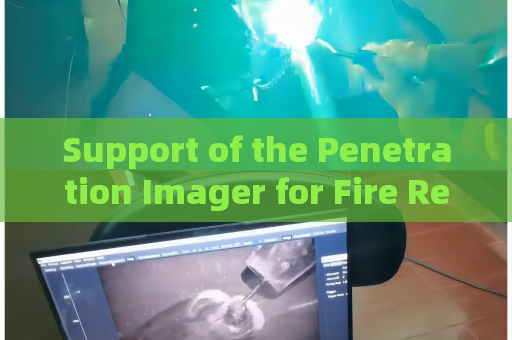
On the fireground, the Penetration Imager can be deployed in two primary ways. First, it can be mounted on a vehicle or tripod outside a burning structure to peer through glass doors or windows that are obscured by rolling smoke and dancing flames. This allows incident commanders to see the interior layout, locate fire spread, and identify victims before any team enters. Second, handheld versions can be carried by search crews advancing through smoke-filled corridors. As firefighters approach a closed door or a wall of fire, the Penetration Imager reveals what lies beyond—provided there is an optical window, such as a tempered glass panel or a plastic skylight. Because the system uses active laser illumination, it works equally well in total darkness and in the presence of bright flames. The operator simply aims the device, adjusts the gate delay to match the target distance, and receives a real-time video feed that cuts through the thermal fog. This capability drastically reduces guesswork and allows teams to move faster with safer decision-making.
The real-world impact is most evident in scenarios where a victim is trapped behind a fire-lit glass partition, or where a structural fire has turned a room into a black, hot cauldron. Standard thermal imagers, while valuable for finding hot spots, often fail to show fine details like a person’s silhouette lying on the floor or a child huddled behind a sofa. The Penetration Imager, by contrast, provides the visual clarity needed for precise rescue—seeing through the optical medium of the window while ignoring the blinding combustion glare. The technology also supports fire investigation, as it can record clear footage through smoke-damaged glass after the flames are suppressed. In every case, the Penetration Imager fulfills its singular role: delivering visible intelligence when fire, smoke, and extreme heat obstruct vision, without ever claiming to penetrate solid walls or dense, optically opaque smoke. It is a purpose-built optical tool that respects the physics of light while pushing the boundaries of what human eyes can perceive in the most hostile fire environments.