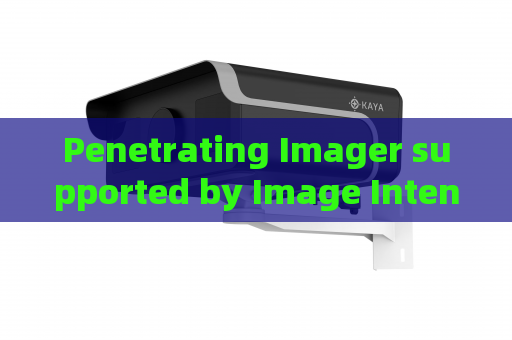
In covert surveillance operations conducted under extremely low-light conditions, law enforcement and security personnel face a critical challenge: detecting and identifying potential threats inside vehicles, such as parked cars or transport vessels, without revealing their own position. Traditional night vision devices require at least some ambient light or rely on infrared illuminators that emit detectable radiation, compromising stealth. Even advanced low-light cameras struggle when no supplementary lighting source is available, often producing noisy or unusable images. Window glass further degrades performance by reflecting light and scattering incoming photons, making it nearly impossible to discern occupants, weapons, or contraband from a safe distance. This operational gap forces teams to move closer or expose themselves, increasing risk. The core problem is the need for a non‑emissive, passive‑looking system that can see through optical barriers and deliver clear imagery in complete darkness—a demand that the Penetrating Imager is specifically engineered to address.
The Penetrating Imager solves this dilemma through laser range‑gated imaging technology, an active optical method that operates without any supplementary lighting source visible to the naked eye or detectable by standard sensors. It uses a high‑repetition‑rate pulsed laser combined with an intensified gated camera (featuring an MCP image intensifier, high‑voltage module, and timing electronics). The system emits short laser pulses toward the target area—such as the inside of a vehicle through its windshield or side windows—and the camera’s gate opens only for the precise time window required to capture light reflected from the intended depth, rejecting backscatter from fog, rain, or the glass itself. This unique gating mechanism enables the imager to overcome the strong backscatter that normally blinds conventional low‑light cameras. By controlling the delay between laser emission and camera activation, operators can “slice” through the optical medium and obtain a high‑contrast image of the target behind the glass, even under zero‑lux conditions. The laser wavelength is invisible to the naked eye and cannot be seen through typical night vision goggles, preserving operational secrecy.
In practical field application, the Penetrating Imager allows a covert surveillance team to remain hundreds of meters away from a subject vehicle while obtaining clear, real‑time video of its interior. For example, during a nighttime stakeout, an officer positions the unit on a tripod or mounts it on a vehicle, aligns the optical axis with the suspect car’s windshield, and adjusts the gate delay to match the distance—typically between 50 and 300 meters. The system automatically compensates for pulsed laser timing variations, and the operator sees a crisp black‑and‑white or color image on the control screen, showing the number of occupants, their movements, or hidden objects. Because the Penetrating Imager does not rely on any external illumination, there is no flash, glow, or infrared beam that could alert the subject. The equipment works effectively through automobile glass, aircraft windows, and glass curtain walls, maintaining image clarity under drizzle, light fog, or haze. However, it is important to note that while it can improve visibility through smoke in fire scenarios by 3 to 5 times, it cannot penetrate dense smoke—this system is strictly an optical solution for transparent or semi‑transparent media, not for opaque barriers.
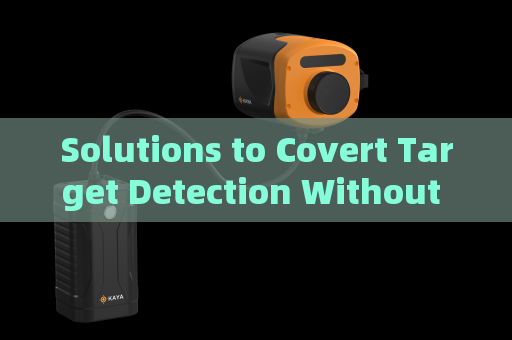
Operational success depends on understanding the system’s depth‑resolution capabilities and environmental limits. The Penetrating Imager can be dialed to image objects as close as 10 meters or as far as several kilometers, depending on the laser power and lens configuration, but the core advantage remains its ability to see through glass without supplementary light. In urban surveillance, this means law enforcement can monitor a vehicle from a rooftop or adjoining building, capturing high‑definition evidence of illicit activity—drug exchanges, weapon handling, or human trafficking—without ever letting the target know they are being watched. The unit’s rugged design withstands weather extremes, and its intuitive interface allows rapid deployment. Unlike thermal imagers that struggle with glass reflections or passive low‑light cameras that fail in absolute darkness, the Penetrating Imager delivers a consistent, actionable picture. This technology transforms covert target detection from a high‑risk gamble into a reliable, safe procedure, upholding the principle that the best surveillance is the one never detected.