Monitoring Capability of the Penetration Imager for Nighttime Illegal Border Activities Under Zero-Light Imaging Conditions
In the dead of night, along remote and poorly lit border stretches, illegal cross-border movements pose a persistent and high-stakes challenge for security forces. Traditional surveillance methods—fixed cameras, night-vision goggles, or thermal imaging—often fail under truly zero-light conditions, especially when suspects conceal themselves behind vehicle windows, aircraft windshields, or glass barriers. The darkness is absolute, and any light source from the patrol side would alert infiltrators or trigger evasive actions. Even passive imaging systems struggle with low signal-to-noise ratios, while active illumination risks revealing the observer’s position. The core problem is not merely the absence of light but the optical obstacles—laminated glass, tinted windshields, or fogged panes—that degrade or block conventional imagery. Officers are left with fragmented situational awareness, unable to confirm whether a stationary vehicle contains illegal cargo or if a figure behind a glass door is an armed smuggler. This reconnaissance gap endangers personnel and undermines border integrity. The demand for a reliable, covert imaging solution that penetrates optical media under zero-light conditions has never been more urgent.
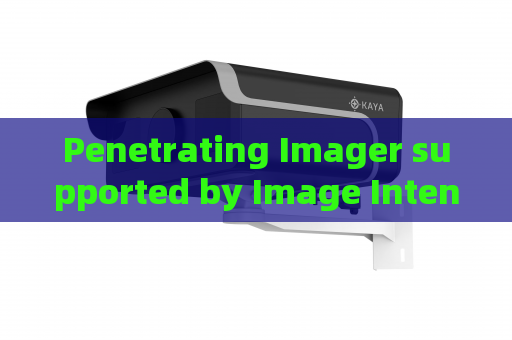
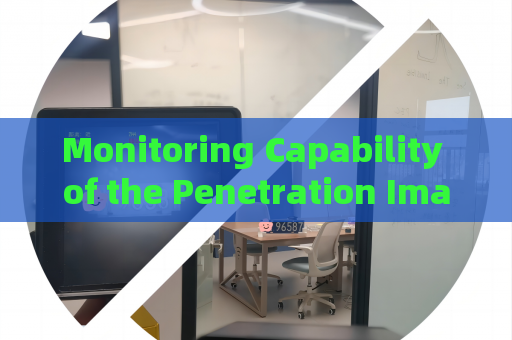
The penetration imager directly addresses these limitations through its core capability: active laser range-gated imaging. Unlike passive night-vision devices that amplify ambient light, this system emits a high-repetition-rate pulsed laser and synchronizes a microchannel plate (MCP) intensified gated camera to capture only the reflection from a specific depth slice. This gating technique effectively suppresses backscatter from fog, rain, snow, or smoke, while allowing the beam to pass through glass panes—automotive windows, aircraft windshields, or building glass curtain walls—without scattering. The result is a high-contrast, high-resolution image of objects behind such optical mediums, even in complete darkness. Because the system is an active imager, it requires no ambient light; the pulsed laser provides its own illumination, yet the nanosecond-scale gating ensures that no stray light betrays the operator’s location. This function is purely optical—based on light travel time and selective shutter timing—and does not involve any non-optical penetration. It remains strictly within the realm of visible and near-infrared light, using the MCP intensifier to amplify the weak return signal. The penetration imager thus transforms a zero-light, glass-obscured scene into a clear, actionable picture for border security teams.
Field application under realistic border conditions demonstrates this capability’s practical value. A patrol unit positioned at a concealed observation point can deploy the penetration imager to scan a line of vehicles approaching a checkpoint after midnight. Even with the headlights off and cabin lights extinguished, the imager reveals the occupants and cargo inside each vehicle through the windshield and side windows. Operators can distinguish empty seats from hidden passengers, detect contraband stashed under a blanket on the back seat, or identify a driver’s hand reaching for a weapon. During foggy or rainy nights, the gating function cuts through the atmospheric haze, maintaining clarity at distances exceeding several hundred meters. The imager’s tripod mount and integrated battery pack allow for silent, continuous monitoring without the need for ground illumination that could compromise the observation post. Because the laser pulse is invisible to the naked eye, the target remains unaware of the scrutiny. The system’s overlay interface displays range and target coordinates, enabling rapid reporting and coordinated response.
Beyond vehicle inspections, the penetration imager proves critical for monitoring border infrastructure such as glass-enclosed watchtowers, airport perimeter fences with glass-reinforced panels, or maritime patrols scanning ferry windows for human trafficking. In zero-light conditions along a river border, the imager can detect individuals attempting to cross by small boat while hiding under a glass fiber canopy—the gated laser sees through the canopy’s transparent sections, revealing heat signatures or movements that thermal imagers might miss due to glass reflection. The operator adjusts the gate delay and width to focus on the target plane, effectively ignoring reflections from raindrops or mist. Training protocols emphasize that the penetration imager does not penetrate solid walls, clothing, or metal—only optical media. This distinction is critical for legal evidence collection: officers can document that the observed activity occurred behind a window, not through a wall, preserving admissibility in court. The technology thus provides border agencies with a decisive advantage: the ability to see through darkness and glass, exactly where threats are most expected, without ever revealing the observer’s hand.