Application Methods of the Penetration Imager for Helping Law Enforcement Covertly Gather Evidence Before Taking Action
In a high-stakes hostage negotiation or drug trafficking surveillance, law enforcement officers often face the critical challenge of verifying the presence of weapons, suspects, or victims inside a vehicle before initiating a tactical breach. Standard optical devices, such as binoculars or telescopic lenses, are rendered useless when a vehicle’s windows are heavily tinted, coated with reflective film, or obscured by rain and fog. Approaching the vehicle for a closer look risks compromising the operation, alerting the subject, and endangering lives. The inability to see through these optical obstacles creates a dangerous information gap, leaving officers to rely on incomplete intelligence or risky assumptions. This is precisely where the Penetration Imager provides a decisive advantage, enabling covert evidence collection from a safe standoff distance by overcoming the very limitations that plague conventional visual reconnaissance.
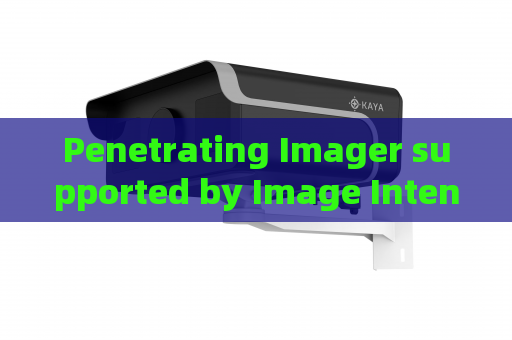
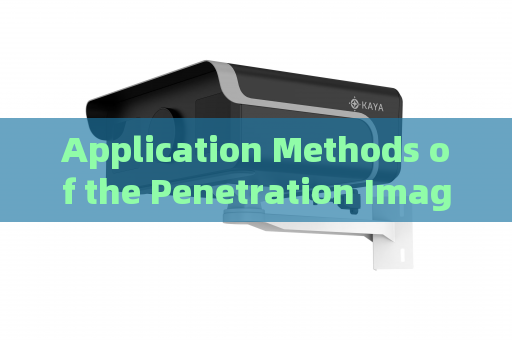
The Penetration Imager, an advanced optical imaging instrument based on laser range-gated imaging technology (gated imaging), directly addresses this operational gap. Its system integrates a high-repetition-rate pulsed laser, an intensified gated camera with an MCP image intensifier, a high-voltage module, a timing module, a beam expander, and an imaging lens. By emitting extremely short laser pulses and synchronizing the camera’s shutter to open only when the reflected light from the target returns, the device effectively eliminates backscatter from the window surface and atmospheric particles. This active imaging capability allows the Penetration Imager to see through automotive glass, train windows, aircraft portholes, and glass curtain walls with high contrast, long range, and strong resistance to interference. Unlike passive optics that fail under glare or darkness, the Penetration Imager produces clear images of occupants, objects, and movements inside a vehicle without requiring the officer to leave a concealed position or expose their presence.
In practice, law enforcement teams deploy the Penetration Imager from a discreet observation post, often hundreds of meters away, to covertly assess a target vehicle before executing a warrant or intervention. The operator simply aims the device through the windshield or side window while staying behind natural cover or within a marked surveillance van. The gated imaging system automatically compensates for varying distances and light conditions, delivering a real-time video feed that reveals whether the suspect is holding a firearm, whether a hostage is bound in the back seat, or whether there are additional individuals hidden beneath seats. Because the device requires no physical contact and emits no detectable radiation, the subject remains completely unaware of the surveillance. Video evidence captured by the Penetration Imager can be recorded and later used to support search warrants or probable cause affidavits, strengthening the legal foundation for action.
The operational reliability of the Penetration Imager extends beyond simple glass penetration. In adverse weather such as heavy rain, snowfall, fog, or even dust storms, the range-gating technique suppresses the scattered light from precipitation particles, maintaining image clarity that a conventional camera would lose entirely. During night-time operations, the pulsed laser provides its own illumination, eliminating the need for visible flashlights or infrared illuminators that might give away the observation point. Officers can monitor a vehicle’s interior continuously over hours, noting changes in occupant positions or the introduction of weapons, all while preserving the element of surprise. This capability transforms the pre-action phase from a period of uncertainty into one of confirmed situational awareness, ultimately reducing the risk of casualties and increasing the likelihood of a successful, evidence-based resolution. The Penetration Imager thereby serves as an indispensable tool for covert evidence gathering, directly addressing the real-world pain point of optically obscured vehicle surveillance in law enforcement.