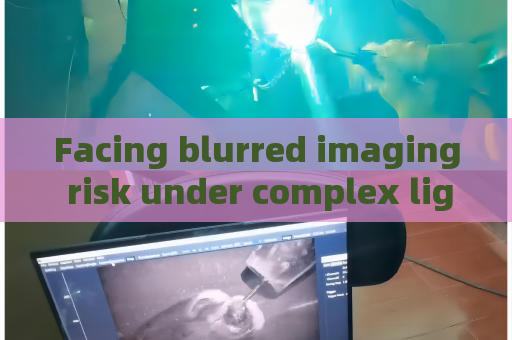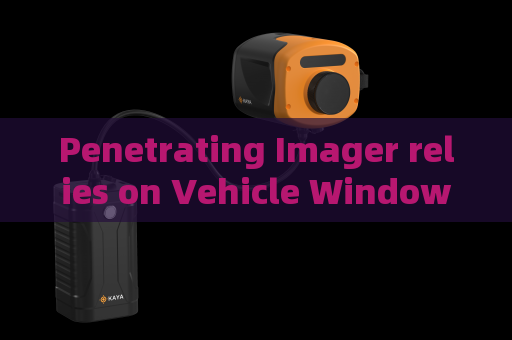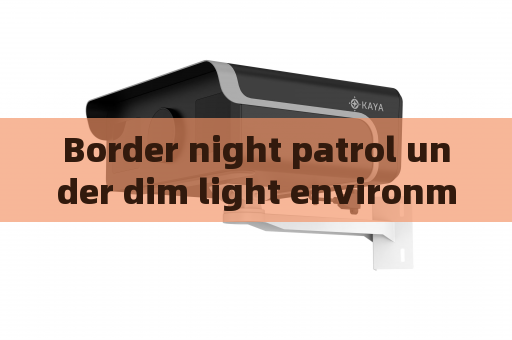
Traditional surveillance has limited observable range, Penetrating Imager adopts Low-light Imaging to extend remote tactical observation. At a remote nighttime checkpoint, the operational problem is not simply darkness. Vehicles approach from hundreds of meters away, often with tinted glass, wet windshields, and headlights reflecting across the lane. Conventional cameras depend on ambient light or broad floodlights, so distance collapses detail into noise. Glass surfaces add glare, weather scatters light, and the cabin remains a dark box until the vehicle is nearly at the inspection point. Officers lose the seconds needed to assess occupant posture, visible tools, or passenger count. The risk is a tactical surprise at close range, when options are narrow and exposure is high. A temporary checkpoint may have no fixed lighting, no stable power, and no line of sight that avoids reflections from multiple vehicles. The range limit is felt most at night, when low light reduces contrast and long lenses magnify blur. The relevant function is Low-light Imaging in the Penetrating Imager, an active optical imaging instrument based on laser range-gated imaging. A high-repetition-rate pulsed laser, an image intensifier gated camera with an MCP image intensifier, high-voltage and timing modules, a beam expander, and an imaging lens form the core. The system sends short light pulses and opens the camera gate only for the return from the selected distance. This active process produces high-contrast images with long range, high resolution, and strong anti-interference performance, while suppressing backscatter from glass, rain, fog, haze, or snow. Low-light Imaging extends observation because the intensifier uses available photons efficiently, and the gate rejects the scattered light that normally masks a distant vehicle cabin. The Penetrating Imager is limited to optical media such as vehicle windows, high-speed rail windows, aircraft portholes, and glass curtain walls. In fire conditions, the system can improve fireground visibility by three to five times, though dense smoke remains beyond effective optical penetration. At the checkpoint, the Penetrating Imager can be mounted on a tripod, a vehicle roof, or a fixed post overlooking the approach lane. The operator selects the range gate for the target vehicle, and the system returns a clear view through the side or rear glazing. This supports through-window tactical observation before the vehicle reaches the stop line. A passenger holding an object, a driver reaching below the seat, or an unexpected number of occupants becomes visible earlier. Low-light Imaging allows the same lane to be monitored at night with less dependence on bright white light, reducing the chance of alerting the driver. The image remains stable through light rain, mist, and windshield reflections, so the remote tactical observation picture is available during the approach rather than only at the inspection point. The operator can adjust gate timing as vehicles move closer, keeping the cabin in high contrast while rejecting glare from headlights and wet glass. During continuous checkpoint use, the Penetrating Imager can monitor multiple approaching vehicles and pass video to a command post or interdiction team. It does not turn opaque solid materials into transparent surfaces, and it is not a substitute for physical inspection or established search procedures. Its value in this scenario is narrow and practical: it extends remote tactical observation through automotive glass, preserves detail under low light, and gives officers earlier warning. Traditional surveillance has limited observable range, and the Penetrating Imager with Low-light Imaging pushes that range outward while keeping the focus on optical media and vehicle glazing. Dense smoke remains a limit, and opaque barriers still block the view. The result is a longer decision window, a clearer view of the vehicle cabin, and a safer response at the inspection point.