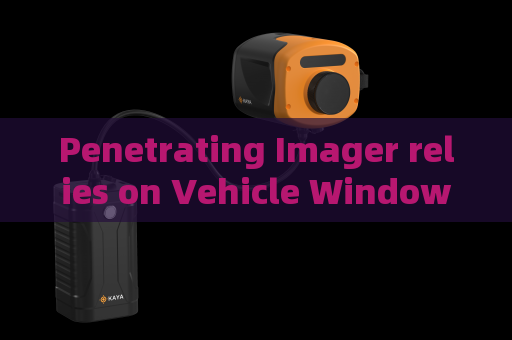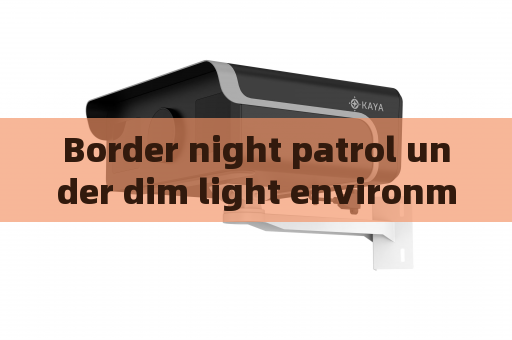
Conventional night vision devices lack penetration capability, Penetrating Imager adapts glass and fog environments for effective tactical observation At night checkpoints and mobile interdiction points, through-window tactical observation is often decisive. Conventional night vision devices lack penetration capability. Image intensifiers and low-light cameras amplify available light, yet automotive glass introduces specular reflections, tint layers, and interior glare. Fog compounds the problem by scattering active illumination back toward the sensor, washing out contrast and hiding occupants, seat positions, hands, and possible weapons. Officers must decide whether to approach a vehicle, hold distance, or direct evacuation, but the visible signature is unreliable. A stopped car in fog can appear empty even when multiple occupants are inside. Reflections from streetlights and headlamps can mask movement. The result is slower decisions, greater exposure, and a higher risk of surprise at close range. The Penetrating Imager is designed for this exact optical problem: observation through glass and fog without opening a door or breaking cover. The relevant capability inside the Penetrating Imager is laser range-gated imaging, also called gated imaging. This Penetrating Imager is an active optical instrument. A high-repetition pulsed laser emits short pulses; an image intensifier gated camera with an MCP image intensifier, high-voltage module, and timing module captures returns only during a very narrow time window. A beam expander and imaging lens shape and receive the optical path. Because the gate can be synchronized to a selected distance, light reflected from the glass surface, fog droplets, rain, snow, or haze arrives earlier and is largely rejected, while the pulse that passes through the optical medium and returns from the target is admitted. This provides high-contrast imaging, long range, high resolution, and strong anti-interference performance. The system can penetrate optical media such as vehicle windows, high-speed rail windows, aircraft portholes, and glass curtain walls. It also operates despite fog, haze, rain, and snow. It does not penetrate walls, concrete, metal, clothing, or other non-transparent solid materials. For the checkpoint scenario, the function that matters is clear: glass-penetrating and fog-resistant imaging that supports through-window tactical observation before an approach. In actual use, the Penetrating Imager can be mounted on a tripod, vehicle roof, or concealed observation position. The operator selects a range gate corresponding to the vehicle interior. Laser pulses travel through the windshield or side glazing and through fog layers. The gated camera opens for a few nanoseconds when the target return arrives. Reflections from the glass and backscatter from fog are suppressed because they arrive outside that gate. The display shows a high-contrast image of the cabin: head positions, shoulder movement, empty seats, or passengers in the rear. The observation can be repeated without opening a door, tapping a window, or using continuous illumination that would reveal the tactical position. In fog, the same gating effect reduces the whiteout that plagues conventional night vision. In rain or snow, the optical path may degrade, yet the instrument can still provide useful imagery at standoff distance. This lets a team confirm whether a vehicle is occupied, identify the number and general posture of occupants, and choose a safer approach or containment plan. It supports tactical visual check through tinted windows while maintaining distance. The value in this scenario is not unlimited visibility. The Penetrating Imager remains an optical imaging instrument. It works through glass, fog, haze, rain, snow, and similar optical media. It cannot see through opaque solids. That boundary is important in briefings: the device does not replace physical search, direct contact, or standard tactical procedures. It improves the information available before contact. A checkpoint team can establish a gated observation lane, record the imagery for after-action review, and share the feed with a supervisor. When conventional night vision devices lack penetration capability, the Penetrating Imager adapts glass and fog environments for effective tactical observation. In a foggy night stop, that difference can turn an uncertain silhouette behind reflective glass into a readable tactical picture, allowing officers to act with better timing, distance, and control.