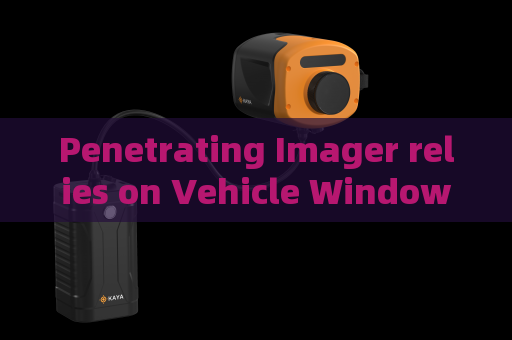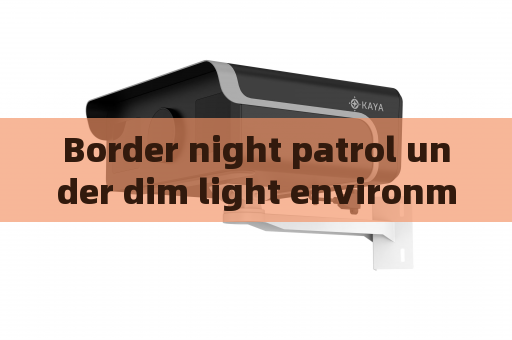
Facing blurred imaging risk under complex light conditions, Penetrating Imager relies on Strong Light Suppression Imaging to obtain clear frames At night checkpoints, highway interdiction points, and urban surveillance positions, law enforcement teams often need to assess vehicle occupants through windshields and side windows before approaching. The problem is not only darkness. Complex light conditions—oncoming high beams, overhead streetlights, flashing emergency lights, wet glass, tinted panes, rain, and haze—produce intense glare, specular reflections, and backscatter. Ordinary cameras and optical viewers bloom, contrast collapses, and frames turn into blurred patches. A hand movement, a seat position, a visible weapon, or a package can vanish inside a white smear. When the windshield acts like a mirror, the interior becomes unreadable at the exact moment a tactical decision is required. Blurred imaging risk then becomes a tactical liability: decisions slow, approaches grow riskier, and visual evidence loses value. The Penetrating Imager is designed for this exact optical environment, where strong light and reflective glazing defeat conventional observation. For vehicle-glass observation, the relevant capability is Strong Light Suppression Imaging. The Penetrating Imager is an active optical instrument based on laser range-gated imaging, also called gated imaging. Its high-repetition-rate pulsed laser, beam expander, imaging lens, and image-intensified gated camera operate as one system. Inside the camera, an MCP image intensifier, high-voltage module, and timing module control exposure through extremely short gate windows. Laser pulses illuminate the selected plane, and the gate opens only when returning light from that distance arrives. Continuous glare from headlights, streetlights, and wet-window reflections arrives outside the gate and is largely excluded. Backscatter from rain, haze, or dirty glass is reduced. This is the specific function that protects image quality when complex light conditions threaten clear frames. The system can also reject light returned from nearer or farther planes, so window reflections and background lamps do not wash out the occupant area. The instrument works only through optical media such as vehicle windows, high-speed rail windows, aircraft portholes, and glass curtain walls. Opaque solid structures remain outside the operating boundary. In this setting, tactical observation through automotive glass can be performed without opening a door or demanding immediate occupant compliance. In practice, an operator positions the Penetrating Imager at a covered observation point, frames the target vehicle, and sets the range gate for the windshield, side window, or rear glass. The pulsed laser illuminates the chosen plane; the gated camera collects the returning light. The resulting frame shows occupants and interior details with high contrast. The gated exposure control stabilizes image brightness when a patrol car’s spotlight, a passing truck’s high beams, or reflective signage crosses the field of view. Tinted windows, rain-slicked glass, and shallow-angle reflections no longer dominate the image. Clear frames arrive in real time, allowing officers to compare posture, hand placement, and visible objects before making contact. The same optical method supports through-glass surveillance at checkpoints, border lanes, and secure parking areas. It improves observation distance and resolution while maintaining an active imaging profile that resists optical interference. The operational effect is a faster, safer assessment based on visual detail rather than assumption. A supervisor can direct the team with more precise language, such as identifying which seat is occupied or whether a hand remains near a center console. The benefit remains tightly defined. The Penetrating Imager does not replace lawful procedures, physical inspection, or direct visual confirmation once a vehicle is stopped. It provides a superior optical view through transparent and tinted glazing when complex light conditions would otherwise ruin image quality. Rain, haze, and strong glare can be managed within the optical path, while opaque solid barriers remain outside the capability. For vehicle-glass missions, the critical value is simple: Penetrating Imager relies on Strong Light Suppression Imaging to obtain clear frames under complex light conditions. That outcome gives tactical teams a reliable visual edge before the next move, supporting better positioning, clearer communication, and reduced exposure during high-risk vehicle stops.