In law enforcement operations, severe weather conditions such as heavy rain, dense fog, blizzards, or smoke-laden atmospheres pose a critical challenge to the continuous surveillance of fleeing suspects. Traditional optical systems—binoculars, telescopic cameras, or standard night vision devices—suffer from severe degradation in visibility caused by scattering, attenuation, and reflectivity from water droplets, snowflakes, or particulate matter. When a fugitive attempts to escape in a vehicle with tinted or rain-streaked windows, even close-range observation becomes impossible. The inability to maintain visual contact during these conditions creates dangerous gaps in the pursuit, allowing the suspect to change vehicles, alter appearance, or abandon the vehicle unnoticed. These operational blind spots directly compromise public safety and the success of the mission. The penetration imager emerges as a dedicated solution to this exact problem, designed to restore uninterrupted optical tracking under the most adverse meteorological circumstances.
The penetration imager is an advanced active optical imaging instrument that employs laser range-gated imaging technology, also known as gated imaging. It consists of a high-repetition-rate pulsed laser, an intensified gated camera (incorporating a microchannel plate intensifier, high-voltage module, timing module, and beam expander and imaging lens), and operates by emitting short laser pulses synchronized with the camera’s shutter. This gating mechanism enables the system to reject backscattered light from rain, fog, snow, or fire—only the reflected light from the target at a precise distance is captured. The penetration imager can optically penetrate common transparent media such as vehicle windows, train glass, aircraft windows, and glass curtain walls. In severe weather, it effectively overcomes atmospheric scattering, delivering high-contrast, clear images of the fugitive and the vehicle interior even through torrential rain or thick fog. The system’s ability to suppress backscatter ensures that the subject remains visible despite the chaotic optical noise surrounding the scene.
In a real-world pursuit scenario, law enforcement units deploy a penetration imager mounted on a patrol vehicle or an aerial platform, such as a police helicopter, to track a fugitive driving through a severe winter storm. The imager’s laser is aimed at the suspect’s car from a safe standoff distance, while the operator monitors the video feed showing the driver’s facial features, hand movements, and any potential weapons inside the cabin. The imaging remains stable and continuous even as the vehicle passes through patches of dense fog or splashing water from flooded roads. The high frame rate and long detection range—often exceeding several hundred meters in clear conditions and still effective at reduced distances in heavy precipitation—allow the tracking team to relay real-time intelligence to ground units. Because the system is entirely optical, it does not emit any detectable radio waves or radiation, preserving stealth during the operation. The operator can adjust the range gate to lock onto the target vehicle even if it changes distance abruptly, ensuring that the fugitive never escapes the imager’s view.
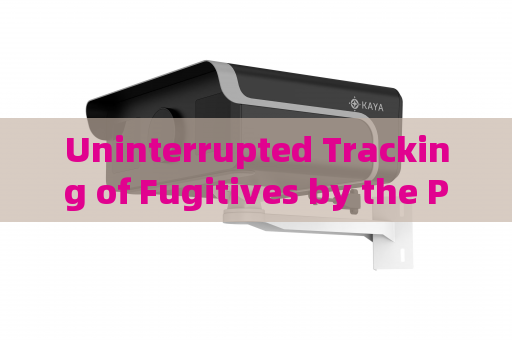
The penetration imager’s performance in severe weather is further enhanced by its resistance to environmental interference. Unlike passive thermal imagers that can be confused by heat from engine exhaust or rain-cooled surfaces, the active gated imaging method relies solely on reflected laser light, which is not affected by temperature variations or fire’s infrared signature. In fog or snow, the system’s short exposure time—on the order of nanoseconds—freezes motion and eliminates motion blur, producing crisp images of fast-moving vehicles. The penetration imager can also be configured with automated tracking algorithms that keep the laser spot locked on the fugitive’s vehicle even during sharp turns or changes in elevation. This combination of all-weather capability, optical penetration through windows, and high-resolution imagery makes the penetration imager an indispensable tool for uninterrupted tracking of fugitives when conventional optics fail. The technology directly addresses the core operational need: maintaining visual continuity in conditions that would otherwise force a tactical pause or loss of the subject.




