Detecting illegal border crossings under zero‑light conditions presents a formidable challenge for perimeter security forces. Conventional night vision devices rely on ambient light or internal infrared illuminators, which are easily defeated by complete darkness or countered by subjects using simple measures such as covering faces or turning off vehicle lights. Even low‑light cameras produce noisy, low‑contrast images when no photon source exists. Moreover, border patrol personnel often face dense fog, heavy rain, or snow that further degrade optical clarity. In such scenarios, smugglers frequently exploit darkness and adverse weather to move contraband or individuals across unmanned sectors. The critical pain point is the inability to obtain clear, actionable evidence at long range when natural and artificial light are absent, leaving security forces blind to real‑time threats.
The 穿透成像仪 directly addresses this deficiency through its laser range‑gated imaging technology. As an active imaging system, it emits high‑repetition‑rate pulsed laser light and synchronizes a gated intensified camera to capture only the backscattered light from the target at a precisely controlled distance. This gating mechanism effectively suppresses the blinding effect of fog, rain, snow, and fire‑generated smoke, enhancing visibility in zero‑light environments by a factor of three to five in fire scenarios. Importantly, the 穿透成像仪 can see through optical media such as vehicle windshields, aircraft windows, and glass curtain walls, enabling border agents to detect occupants inside a suspect vehicle without approaching it. The system delivers high‑contrast, high‑resolution images even in absolute darkness, overcoming the limitations of passive night vision and thermal imaging, which cannot penetrate glass or provide fine facial details.
In actual border patrol operations, the 穿透成像仪 is mounted on a tripod or vehicle platform and operated from a concealed observation post. The operator selects a range gate that matches the distance to the target—for example, 200 meters across an open field. The pulsed laser illuminates the scene, and the gated camera captures only the reflected light from that specific depth, blocking out foreground clutter and atmospheric haze. This allows the operator to identify individuals, vehicles, or concealed compartments through tinted windows at night. The system’s ability to work in heavy rain or fog means that illegal crossing attempts during stormy weather are no longer invisible. Patrol teams can relay real‑time imagery to command centers, enabling timely interdiction without exposing the observation post.
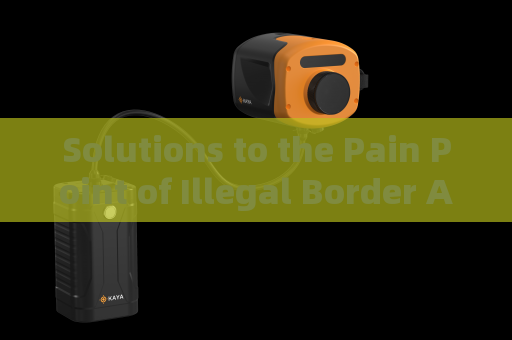
The operational advantage extends to documenting evidence for legal proceedings. The high‑resolution images captured by the 穿透成像仪 under zero‑light conditions provide unmistakable details—such as facial features, clothing patterns, or license plates—that would be impossible with standard night vision. Border security forces can thus build solid case files against human traffickers and drug smugglers who rely on darkness as cover. By integrating this technology into fixed surveillance towers or mobile patrol units, law enforcement agencies eliminate the blind spots that have long plagued nighttime border security. The 穿透成像仪 transforms complete darkness into a tactical advantage, turning the pain point of zero‑light detection into a solved problem.




