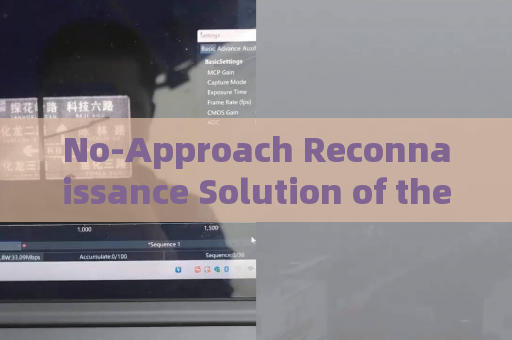
No-Approach Reconnaissance Solution of the Penetration Imager with Through-Window Imaging for Tinted Vehicles Hiding People and Cargo Law enforcement and security personnel frequently encounter situations where suspicious vehicles with heavily tinted windows are used to conceal individuals or illicit cargo. A routine traffic stop or checkpoint inspection becomes a high-risk operation because the officer cannot see inside the vehicle before approaching. The occupants may be armed, or the cargo could be contraband or even explosives. Approaching the vehicle blindly forces the officer into a potential ambush zone, compromising both safety and tactical advantage. Traditional methods, such as knocking on the window or requesting the driver to roll it down, alert the subjects and forfeit the element of surprise. The core pain point lies in the inability to gain visual intelligence from a safe standoff distance without any physical interaction, especially when the window film is so dark that even a flashlight fails to penetrate. The Penetration Imager offers a dedicated solution for this exact scenario through its through-window imaging capability. This device is an active optical imaging system built on laser range-gated imaging technology, also known as gated imaging. It consists of a high-repetition-rate pulsed laser, an intensified gated camera incorporating a microchannel plate intensifier, a high-voltage module, a timing module, a beam expander, and an imaging lens. When aimed at a tinted vehicle window from a safe distance, the pulsed laser illuminates the target, and the gated camera synchronizes its exposure to capture only the light reflected from objects behind the glass, effectively rejecting the backscatter and glare caused by the tint film. This allows the operator to see through the dark window as if it were clear glass, revealing people, weapons, or hidden cargo without ever needing to approach the vehicle. In practice, the Penetration Imager transforms a dangerous blind stop into a controlled, low-risk operation. An officer positioned behind cover or at a distance of tens of meters can aim the device at the suspect vehicle’s side or rear window. Within seconds, a high-contrast image of the interior appears on the screen, showing the number of occupants, their hand positions, and any visible items. This intelligence enables the officer to decide the appropriate tactical response—whether to call backup, use a loudspeaker command, or initiate a felony stop procedure. The system operates effectively in daylight, and even more so in low-light or nighttime conditions, where the active illumination provides its own light source. Adverse weather such as rain, fog, or snow does not degrade the image quality, as the gating mechanism filters out scattered light from precipitation. The operational advantage extends to multi-vehicle screening in parking lots or border crossings. A single operator can rapidly scan a row of tinted vehicles from a patrol vehicle or a fixed observation point, identifying anomalies such as a person hiding in the trunk area or stacked cargo boxes that do not match the vehicle’s registration. The Penetration Imager does not rely on any form of radiation, X-rays, or radio waves; it is purely an optical system that uses light in the visible and near-infrared spectrum. It cannot see through walls, metal, or clothing, and it is ineffective against thick smoke, but for the specific application of through-window reconnaissance of tinted vehicles, it provides a non-contact, real-time, and safe solution that directly addresses the vulnerability of traditional approaches. The ability to maintain standoff distance while gaining critical visual information fundamentally changes the risk equation for every officer who faces an unknown vehicle.




