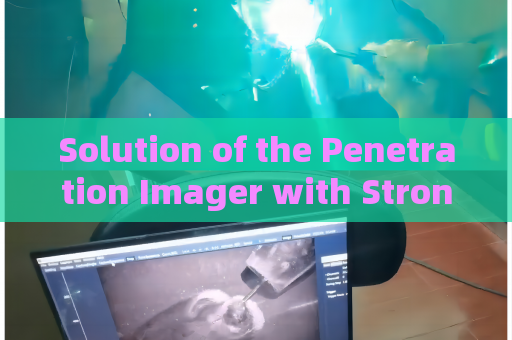
Solution of the Penetration Imager with Strong Light Suppression Imaging for Driver Identification Obstructed by Vehicle Headlights At night, law enforcement officers face a critical challenge when attempting to identify a vehicle driver during a traffic stop. Approaching a car with its headlights on full beam creates a blinding wall of glare that masks the occupant’s facial features. Standard cameras and even the naked eye struggle to capture any useful detail behind that intense light front. The driver’s identity remains hidden, turning a routine check into a high-risk guessing game. This obstruction is not merely a visual annoyance—it directly compromises officer safety and the efficiency of evidence collection. The core pain point is simple: how to see through both the glass windshield and the simultaneous overwhelming light emitted by the vehicle’s own headlamps, all in real time and at a distance that keeps personnel out of harm’s way. The penetration imager with strong light suppression imaging offers a direct solution to this dual obstacle. This advanced optical instrument relies on laser range-gated imaging technology, which actively illuminates the target with a pulsed laser and synchronizes the camera’s ultra-fast shutter to accept light only from a precise depth zone. By gating out all light that arrives before or after that narrow window, the system effectively discards the blinding reflections and backscatter from the headlight beam. The result is a high-contrast, clear image of the driver’s face through the windshield, even when the vehicle’s headlights are pointed directly at the observation point. The active illumination overpowers the glare, while the gating mechanism eliminates the unwanted light, providing the operator with a stable, recognizable facial capture that would be impossible with passive imaging systems. In practical deployment, the penetration imager is mounted either on a patrol vehicle or used as a handheld unit from a safe standoff distance of 50 to 150 meters. The operator aims the device toward the target vehicle and activates the laser-based illumination. Within seconds, the built-in enhanced camera produces a live video feed showing the driver’s facial features, despite the headlights remaining on. The system’s high resolution ensures that even details like eye color, facial hair, or distinguishing marks are visible. This allows the officer to confirm the driver’s identity against a wanted list or to document the face for later evidence, all without ever needing to approach the vehicle and expose themselves to the glare or potential threats. This capability transforms a previously dangerous and uncertain task into a controlled, remote identification process. The same technology also filters out vibrations from the patrol car engine and compensates for slight movements, maintaining consistent image quality under real-world conditions. When the driver is asked to exit the vehicle, the officer already possesses a confirmed facial match, reducing the need for close contact and de-escalating potential confrontations. The penetration imager with strong light suppression imaging thus turns a blinding headlight obstacle into a transparent window, restoring situational awareness and operational safety in one of the most common yet risky nighttime scenarios in law enforcement.




