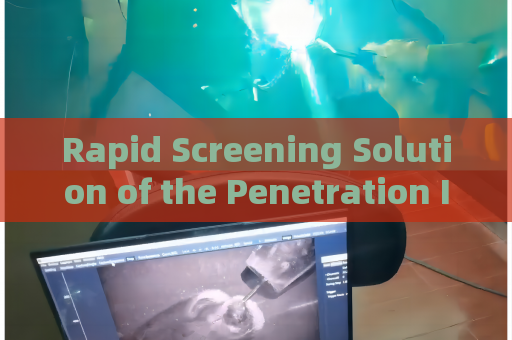
Rapid Screening Solution of the Penetration Imager for High-Reflective Mirror-Film Vehicles with Through-Tint Imaging Law enforcement officers conducting roadside checkpoints or covert surveillance frequently encounter vehicles coated with high-reflective mirror film. This film creates a near-opaque barrier to the naked eye and standard optical devices, turning the vehicle into a mobile blind spot. Sunlight or headlights bounce off the highly reflective surface, causing glare that obliterates any attempt to see inside. The core problem is not merely the darkness of tinted windows but the extreme reflectivity that defeats conventional cameras and binoculars. Officers must quickly assess whether a suspect car contains concealed persons, weapons, or contraband, yet the mirror film forces them to rely on risky physical approaches or prolonged observation. This gap in visibility creates a critical operational vulnerability, especially during high-tempo traffic stops or border security checks where every second matters and the element of surprise is vital. The Penetration Imager directly addresses this screening bottleneck. The Penetration Imager solves this challenge through its laser range-gated imaging capability. Unlike passive optical systems, this active imaging instrument emits short, high-frequency laser pulses that are synchronized with an ultra-fast gated camera. The system's design—comprising a high-repetition pulsed laser, an intensified gated camera with MCP image intensifier, and precision timing modules—allows it to selectively capture light returning from a specific distance. When aimed at a high-reflective mirror-film vehicle, the laser pulse travels through the glass and the reflective coating, illuminating the interior. The gating mechanism rejects the overwhelming backscatter from the mirror surface and the glare from external light sources, effectively stripping away the reflective layer. The result is a clear, high-contrast image of the vehicle's cabin, achieved in real time without requiring the officer to approach the car or break the film. This technology exploits the optical transparency of the glass substrate beneath the mirror film, a physical property that conventional imaging cannot leverage. In practical deployment, the Rapid Screening Solution transforms a routine traffic stop into a precise intelligence-gathering operation. An officer can stand at a safe standoff distance of 20 to 50 meters, point the Penetration Imager at the target vehicle's windshield or side windows, and instantly see occupants, their movements, and any hidden objects. The device operates effectively in bright daylight, at night, and even through fog or rain, because the laser wavelength and gating window are optimized to cut through atmospheric scattering. High-reflective mirror film, which would normally send a blinding flare back to the user, becomes invisible to the system. The through-tint imaging mode specifically enhances the visibility of objects behind dark or mirrored coatings, revealing details such as hand positions, seat configurations, and loose items. This capability reduces the need for aggressive tactical entries and allows officers to de-escalate or request backup based on actual visual intelligence rather than guesswork. The operational simplicity of the Penetration Imager further strengthens its utility in rapid screening scenarios. The unit is handheld or vehicle-mounted, with a display that shows the gated image in real time. No complex calibration is required; the operator selects the appropriate distance gate based on the vehicle's location and simply observes. For multi-vehicle screening at a checkpoint, an officer can sweep a line of cars in seconds, identifying which ones contain passengers or suspicious cargo despite identical mirror-film exteriors. The device's laser is eye-safe at the operational range, and its active illumination is not visible to the target, maintaining tactical surprise. Because the Penetration Imager relies solely on light—laser photons reflected from the interior—it remains strictly within the optical domain, avoiding any confusion with radar or X-ray systems. This screening solution fills a persistent void in law enforcement toolkits, turning a vehicle's defensive reflective coating into a vulnerability that officers can exploit to gain critical situational awareness without compromising safety.




