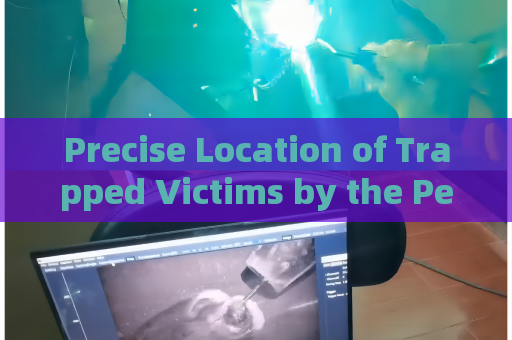
Precise Location of Trapped Victims by the Penetration Imager When Flames Obstruct Vision at Fire Scenes with Fire Penetration Imaging
In a raging structure fire, flames often billow from windows and doorways, creating a blinding wall of incandescent light that completely obscures the interior. Firefighters advancing into such environments face a grave operational hazard: the intense glare from burning materials overwhelms conventional optical tools, making it impossible to visually confirm the position of trapped victims. Even thermal imaging cameras, which rely on heat signatures, can be saturated by the high-temperature flames themselves, rendering the background indiscernible. This visibility gap forces rescuers to rely on sound or thermal patterns that are often unreliable, delaying critical rescue decisions. The core problem is that when flames obstruct vision at fire scenes, the ability to precisely locate trapped victims collapses, turning a search into a blind, time-consuming gamble against smoke and heat. The Penetration Imager directly addresses this challenge through its advanced laser range-gated imaging technology. Unlike passive optical devices, this active system emits high-repetition-rate pulsed laser light and synchronizes an intensified gated camera with an MCP image intensifier to capture only the return signals from a narrow depth of field. By precisely timing the gate window, the imager rejects the overwhelming light emitted by flames and the backscatter from airborne particles, effectively "seeing through" the fire barrier. This capability allows the Penetration Imager to resolve the contours of victims standing or lying beyond the flame front, even when the fire’s luminance saturates the visible spectrum. The system’s narrow optical gate acts as a temporal filter, enabling it to maintain high contrast and resolution while suppressing the blinding glare that defeats standard cameras. In actual fireground operations, this functionality transforms search tactics. Firefighters equipped with a hand-held or tripod-mounted Penetration Imager can scan a burning room from the entrance, using the device’s real-time video feed to identify the precise location of trapped victims through rolling flames. The imager typically improves visibility by three to five times in such conditions, allowing rescuers to distinguish limbs, heads, or even subtle movements inside a compartment that appears as a solid sheet of fire to the naked eye. Once the target is confirmed, the attack crew can deploy a hose line directly toward that sector, reducing wasted time and risk. The device also supports remote operation via robotic platforms, enabling safe reconnaissance into deep flame zones without exposing personnel to unnecessary hazard. This precision is further refined by the Penetration Imager’s ability to operate through multiple optical mediums simultaneously. In a typical fire scene, flames may be accompanied by glass fragments from broken windows or wind-driven embers, but the system’s resistance to such interference remains stable. The operator adjusts the gate delay to match the expected distance of the trapped person—often between five and thirty meters—and the imager automatically cancels out the fire’s glow, presenting a clear silhouette against a dark background. The Penetration Imager does not penetrate smoke (which remains a separate challenge), but in the specific scenario where flames obstruct vision, it provides the only reliable optical means to achieve precise location of trapped victims, directly enabling faster extrication and higher survival rates.




