In high-stakes law enforcement and counter-terrorism operations, the ability to assess threats inside a vehicle before making contact is often compromised by reflections, tinted glazing, or low ambient light. A suspect’s car parked in a dim alley, with its windows rolled up and privacy film applied, can become an opaque barrier. Standard optical binoculars or direct visual inspection fail to reveal the occupant’s hands, the presence of a weapon, or the state of the hostage. Officers are forced to expose themselves to unknown danger during approach, or rely on risky physical entry. The core problem is that conventional optics cannot separate the image of the interior from the bright glare or the dark tint, leaving a critical intelligence gap in the seconds that decide survival.
The Penetrating Imager addresses this exact problem by using a mature through-glass imaging technology built on laser distance-gated imaging. Unlike passive cameras that struggle with backscatter and low contrast, this active system fires a high-repetition pulsed laser and synchronizes an image-intensified gated camera to capture only the light reflected from the target plane, rejecting all scattered or reflected light from the glass surface and atmospheric particles. The result is a clear, high-contrast view of the vehicle interior through the windshield or side windows, even when those windows are heavily tinted, wet, or covered in dirt. The Penetrating Imager’s ability to perform tactical observation through automotive glass allows operators to see the driver’s seat, rear passenger area, and floor space without any physical contact or compromise of position.
In practical deployment, the operator positions the handheld unit at a safe standoff distance—typically 10 to 50 meters—and directs the imaging head toward the target vehicle. The through-glass surveillance mode activates automatically after a brief calibration. The built-in display shows the interior in real time, with sufficient resolution to identify hand movements, objects on seats, and even facial features when the vehicle is stationary. The system operates covertly, emitting no visible light or sound, and the laser pulse is eye-safe at operational ranges. This enables a tactical team to conduct a through-window tactical recce from behind cover, confirming the presence of weapons, the number of subjects, and the status of any compromised individuals before making entry decisions.
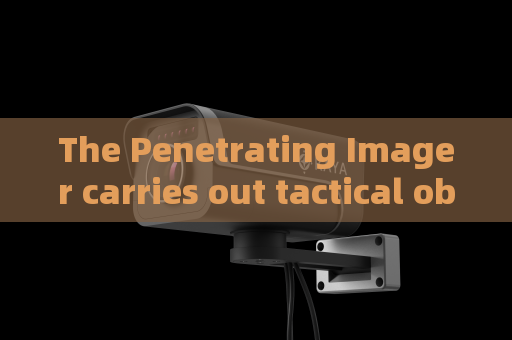
Further refining the single-scenario focus, the Penetrating Imager excels in the specific condition of low-light or zero-light environments where a vehicle’s interior is essentially a dark cavity. Using its built-in low-light imaging capability combined with the gated laser illumination, it produces detailed images that passive night vision devices cannot achieve when faced with a reflective glass barrier. The tactical visual check through tinted windows becomes routine rather than a gamble. During a traffic stop or a hostage standoff, officers can maintain a safe distance, observe the driver’s hands for any sudden movement toward a concealed firearm, and relay the intelligence via radio without ever approaching the vehicle. This not only reduces the risk of ambush but also preserves the element of surprise when intervention becomes necessary. The Penetrating Imager transforms a dangerous blind spot into a controlled observation window, making tactical observation through automotive glass a reliable, repeatable capability for modern law enforcement.




