In tactical law enforcement scenarios, officers often need to assess the interior of a stationary vehicle from a safe distance without alerting the occupants. Sunlight reflecting off automotive glass creates severe glare, while shadows inside the cabin obscure critical details such as hand placement or hidden objects. Ambient light pollution—whether from direct sun, street lamps, or headlights—degrades image contrast and makes it nearly impossible to confirm whether a subject is reaching for a weapon. This is the core challenge: a Penetrating Imager must extract usable intelligence through highly reflective, tinted, or layered vehicle glazing while being blinded by the very light that illuminates the scene. Without a solution, surveillance teams remain forced to close the distance, increasing operational risk.
Laser Range-Gated Imaging directly attacks this problem by synchronizing a pulsed laser with a gated camera shutter. The imager fires a nanosecond-duration laser pulse toward the target, then opens its intensifier only during the precise window when the reflected light from the target returns. Ambient light—which is continuous and arrives at all times—is almost entirely blocked because the shutter remains closed outside the narrow gate. This technology, embedded in the Penetrating Imager, effectively strips away the background illumination that causes glare and washout. The laser’s narrow wavelength also permits narrowband filtering, further suppressing any residual sunlight or artificial light. In practical terms, an operator can aim the device at a car windshield from 200 meters away and see the driver’s face, hands, and objects on the seat despite bright sun hitting the glass directly.
Field deployment of the Penetrating Imager for through-window tactical observation follows a straightforward workflow. An officer sets up the tripod-mounted unit behind cover, activates the laser, and adjusts the gate delay to match the target distance—typically calculated via an integrated rangefinder. The camera’s image intensifier then captures only the laser-illuminated slice of the scene at the exact depth of the windshield. Because the system rejects scattered light from fog, rain, or dust, even adverse weather does not defeat the observation. Operators can monitor live video on a ruggedized tablet, recording evidence-grade imagery. The entire process remains passive from the target’s perspective: the laser is invisible to the naked eye, and no flash or beam is detectable through the glass. This allows covert, stand-off reconnaissance without tipping off suspects or compromising the operation.
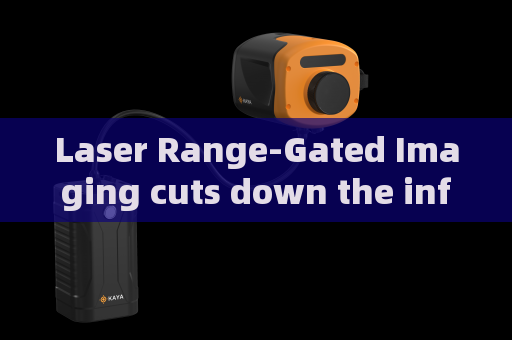
A critical nuance in vehicle glass observation involves multiple refractive layers. Modern laminated windshields consist of two glass sheets bonded with a polyvinyl butyral interlayer. Standard optics produce double reflections and ghosting. The Penetrating Imager eliminates this by illuminating only a specific focal plane—the interior surface of the glass or the cabin beyond it—while the range gate is short enough to exclude the outer surface reflection. Combined with the suppression of ambient light, the image shows a clear, high‑contrast view of the passenger compartment. Officers can identify concealed items in the footwell, verify seat occupancy, and even read dashboard displays. This capability transforms ambiguous visual noise into actionable intelligence, allowing commanders to make informed threat assessments before initiating a stop or arrest.




