In hostage rescue operations, the single greatest tactical blind spot is the window. A kidnapper barricaded inside a vehicle or a room with a glass façade can see out, but the tactical team outside cannot see in—at least not with clarity. Standard optical devices, from binoculars to telephoto lenses, are defeated by reflections on glass, tinted films, or glare from ambient light. Night-vision goggles struggle with the contrast between a brightly lit interior and a dark exterior. Thermal imagers pick up heat but cannot distinguish facial features or weapon shapes through double-pane glass. The result is a dangerous information vacuum: the commander on the ground does not know how many hostages are inside, where the assailant is positioned, or whether an improvised explosive device is being assembled. Every second of uncertainty increases the risk to hostages and operators alike. Through-window tactical observation becomes not just a logistical challenge but a life-or-death requirement.
The Penetrating Imager directly solves this problem. It is an active optical imaging system based on laser range-gated imaging technology. A high-repetition-rate pulsed laser fires ultra-short light pulses toward the target window, while an intensified gated camera with a microchannel plate image intensifier, a high-voltage module, and a timing module opens its shutter only for the precise time window when the reflected light returns from the scene behind the glass. This temporal gating effectively strips away the scattered light from the window surface itself—eliminating reflections, glare, and backscatter. The result is a clear, high-contrast image of the interior beyond the glass. The Penetrating Imager is designed specifically for optical media: vehicle windows, train windows, aircraft portholes, and glass curtain walls. It also operates reliably in fog, haze, rain, snow, and even through fire, boosting visibility in fire conditions three to five times. Notably, it does not penetrate non-transparent solids like walls, concrete, or metal, and it is not a radar, sonar, or X-ray device—its capabilities are strictly optical.
On the ground, the Penetrating Imager can be deployed from a covert observation post at a distance of several hundred meters. The operator aims the device at the suspect vehicle or building window, adjusts the gating range to match the depth of the interior, and instantly obtains a live video feed of the hostage-taker’s position, the hostage’s condition, and any objects on the floor or tables. The system works in daylight, low-light, and even zero-light conditions because it is an active imager—the laser provides its own illumination. For a vehicle hostage scenario, the device can see through heavily tinted automotive glass, a common tactic used by kidnappers to hide their movements. The tactical commander can then order a precise breach: the entry team knows exactly where the threat is located, whether the hostage is seated or standing, and whether the assailant holds a weapon in their dominant hand. This real-time intelligence dramatically reduces the need for dynamic entries and guesswork.
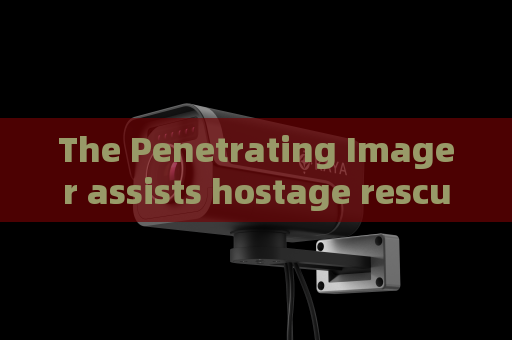
In a recent urban hostage drill, a team positioned 80 meters from a parked SUV with blacked-out windows used the Penetrating Imager to confirm that the "hostage" was in the back seat and that the "perpetrator" had a pistol aimed at the front windshield—information that standard binoculars could not provide due to the tinting. The operator noted the crisp detail of the perpetrator’s watch strap and the hostage’s shirt color. The team then executed a simultaneous four-door breach, neutralizing the threat without a single round fired. The Penetrating Imager’s through-window observation capability gave them the equivalent of X-ray vision for glass—without any of the limitations of thermal or acoustic systems. For hostage rescue units, it is the difference between acting on a hunch and acting on certainty.




