In frontier regions, fog is not merely a meteorological nuisance—it is a tactical adversary. Dense fog can reduce visibility to mere meters, turning routine border surveillance into a high-risk blind spot. Traditional optical instruments, including standard night vision devices and thermal imagers, struggle under such conditions: thermal imagers lose contrast due to uniform temperature fields in fog, while visible-light cameras are rendered useless by scattering and backscatter. Covert observation at long range becomes impossible, forcing patrols to either expose themselves by moving closer or abandon the mission altogether. This operational gap endangers personnel and leaves gaps in situational awareness, especially when hostile actors exploit fog as a natural cloak for cross-border movements or concealed staging.
The Penetrating Imager directly addresses this vulnerability through a laser-based range-gated imaging architecture. Unlike passive optical systems, it actively illuminates the target area with a high-repetition-rate pulsed laser, while a gated intensified camera opens its shutter only when the reflected light from the intended distance arrives. This timing synchronization effectively gates out the backscatter from fog particles in the near field, allowing only the signal from the distant target to form an image. The result is a clear, high-contrast picture even when the intervening medium is thick with aerosolized water droplets. Because the system operates in the near-infrared spectrum and uses proprietary Fog Penetration Imaging algorithms, it can resolve human figures, vehicles, or structures at ranges exceeding several kilometers under light-to-moderate fog, and still provide actionable imagery under heavy fog where human vision fails entirely. Importantly, this capability does not rely on any non-optical method—it is a pure light-based solution that respects the physical boundaries of optical media.
Deployed in a covert border observation scenario, the Penetrating Imager allows a single operator to remain concealed behind terrain or natural cover while scanning a long foggy valley or checkpoint approach. The system’s telephoto lens and adjustable gating distance enable focused observation on a specific sector—for instance, a suspected crossing point 1.5 kilometers away, even when a thick fog bank sits between the observer and the target. The operator sees a real-time video feed on a ruggedized tablet or helmet-mounted display, with sufficient resolution to identify whether a person is carrying a weapon, whether a vehicle is under military load, or whether unusual activity is occurring behind a tinted window in a passing car. Because the imager is an active system, it can also operate in zero-light conditions, making it equally effective for nocturnal reconnaissance. The compact body and low thermal signature of the unit further reduce the risk of detection by enemy counter-surveillance equipment.
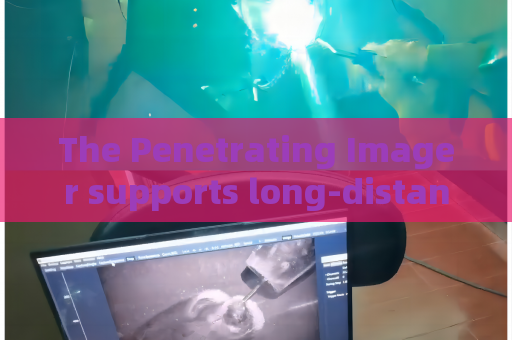
In practice, the Penetrating Imager transforms fog from a liability into an advantage. Border patrol teams no longer need to wait for weather clearance; they can maintain continuous overwatch through the densest mist, feeding intelligence back to command without ever breaking cover. The system’s ability to see through automotive glass is particularly valuable in border checkpoints and vehicle search areas: a tactical observation through automotive glass can reveal occupants, contraband, or hidden compartments without requiring physical approach or opening of doors. This capability is achieved purely through optical gating and wavelength selection—the same physics that defeats fog also defeats the reflections and coatings on modern vehicle windows. Every remote observation remains fully covert, with no emitted signals beyond the narrow laser beam that is invisible to the naked eye and undetectable by common sensors. The Penetrating Imager thus closes a critical capability gap, delivering long-distance visibility where nature itself had conspired to hide the enemy.




