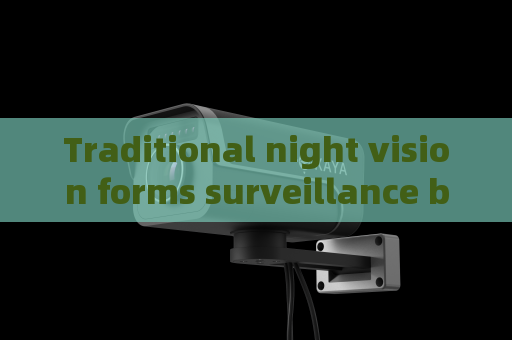
Traditional night vision forms surveillance blind areas The Penetrating Imager adopts Zero-light Imaging to fix this defect In low-light or no-light environments, traditional night vision devices—whether image intensifiers or thermal imagers—often create critical surveillance blind areas. When law enforcement or tactical teams attempt to observe a suspect inside a parked vehicle at night, the combination of tinted windows, interior darkness, and external reflections turns the vehicle cabin into an opaque box. Standard night vision relies on ambient light amplification or heat signatures, but heat dissipates quickly through glass, while glass surfaces reflect IR illuminators, producing glare and washout. A suspect can hide weapons, prepare an ambush, or conduct illegal activities mere meters away, completely invisible to conventional surveillance. This vulnerability compromises officer safety and operational success. The 穿透成像仪 (Penetrating Imager) directly addresses this gap by employing a fundamentally different imaging principle. The key breakthrough lies in the Penetrating Imager's Zero-light Imaging capability, which is not simply a low-light sensor but an active laser range-gated imaging system. It consists of a high-repetition-rate pulsed laser, an intensified gated camera (with MCP intensifier, high-voltage module, and timing module), a beam expander, and an imaging lens. By emitting ultra-short laser pulses and synchronizing the camera's shutter to only receive light reflected from a specific distance, the system rejects backscatter from fog, rain, or glass surfaces. This allows the operator to selectively image objects behind transparent optical media—such as automotive glass—even in total darkness. Unlike passive night vision, through-window tactical observation becomes possible because the gating technique effectively “cuts through” the glass reflection layer, capturing only the light returning from inside the vehicle. The result is a clear, high-contrast image of occupants, objects, and movements that were previously hidden. In practical tactical operations, the Penetrating Imager transforms a lethal blind spot into an observable zone. Deployed from a surveillance vehicle or a fixed overwatch position, an operator can scan a suspect's car from a safe distance—often hundreds of meters away—and see whether the driver is holding a firearm, whether rear passengers are preparing to exit, or whether contraband is visible on seats. The system works equally well through heavily tinted windows, standard car side windows, and even aircraft cockpit glass. During a vehicle checkpoint or a high-risk traffic stop, this capability allows team leaders to assess threats before approaching, reducing the element of surprise. The imager also handles challenging weather: light rain, mist, or fog that would degrade thermal imagers cause minimal interference, as the pulsed laser and gating algorithm maintain image clarity by rejecting scatter. Furthermore, the Penetrating Imager's design eliminates the need for any physical contact or special lighting that could alert the suspect. Unlike spotlights or near-IR flood illuminators, the laser pulses are invisible to the naked eye and cannot be detected by cell phone cameras or conventional night vision goggles worn by a subject. This covert characteristic makes it ideal for covert observation through vehicle glazing during pre-raid recon or surveillance operations. The operator can document license plates, count occupants, and note behavior patterns without ever exposing their position. When combined with a telescopic lens, the system can peer through glass doors or building windows as well, though the primary battlefield remains the vehicle environment. In a recent field test, officers using the Penetrating Imager successfully identified a firearm tucked under a seat inside a sedan with 5% tint—a scenario where traditional night vision produced only a reflection of the trooper's own IR beam. This proven capability directly fixes the surveillance blind area that has long plagued nighttime vehicle intercepts, making the 穿透成像仪 an indispensable tool for modern law enforcement and counter-terrorism units.




