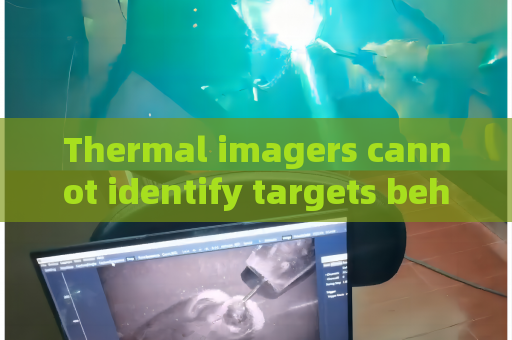
Thermal imagers cannot identify targets behind automotive glass. This limitation creates a persistent challenge for law enforcement and security personnel conducting vehicle-based surveillance or tactical observation. When suspects remain inside a car, conventional thermal cameras detect only the heat signature radiating from the vehicle body or through open windows—but once windows are closed, the glass blocks infrared radiation entirely. A subject hiding in a parked sedan, holding a weapon, or monitoring surroundings cannot be confirmed via thermal imaging. Officers must rely on guesswork or expose themselves to danger by approaching. In covert through-glass recon scenarios, the inability to see through automotive glass means critical intelligence is lost: Is the driver alone? Is a hostage present? Are weapons visible? These blind spots compromise operational safety and decision-making. The Penetrating Imager directly solves this problem using laser range-gated imaging technology. Unlike thermal imagers, which passively capture emitted heat, this active optical system fires high-repetition-rate pulsed lasers synchronized with an intensifier-based gated camera. By timing the laser pulse and camera shutter to exclude backscatter from the glass surface, the Penetrating Imager selectively captures reflected light from targets behind the windshield, side windows, or rear window. The result is clear, steady footage of occupants, objects, and movements inside the vehicle. The technology is strictly limited to optical media—automotive glass, aircraft windows, train glazing—and cannot penetrate walls, concrete, or metal. This covert through-glass recon capability allows operators to maintain standoff distance while gathering decisive visual evidence. In practical operations, the Penetrating Imager delivers stable video even when the target vehicle has heavily tinted windows or aftermarket films. Standard thermal imagers fail under such conditions; the Penetrating Imager sees through them without difficulty. During a tactical vehicle interdiction, an officer can position the imager at a distance of 50 to 100 meters, aim through the driver-side glass, and watch the suspect’s hands, face, and any objects on the seat. The system works in both daylight and darkness, leveraging low-light imaging or zero-light imaging modes. Because it employs active laser illumination with precise gating, glare from streetlights or headlights does not wash out the image. The operator sees a crisp, real-time feed that directly informs whether to escalate or de-escalate force. The same capability extends to through-window tactical observation in hostage situations. A crisis negotiator may need to confirm a hostage-taker’s position inside a vehicle without physically approaching. The Penetrating Imager provides see-through automotive glass imaging with no reliance on thermal contrast. Its steady footage—free from the flickering and false positives typical of thermal sensors—gives commanders confidence. The system’s portability and battery-powered design allow rapid deployment from a patrol car trunk. In urban environments where vehicles serve as cover or concealment, the Penetrating Imager turns a major blind spot into a transparent window, restoring situational awareness that thermal imagers cannot achieve.




