In tactical surveillance and law enforcement operations, mild mist conditions often present a deceptive challenge. Unlike thick fog that halts all visual observation, light mist scatters ambient light unevenly, creating a veil that blurs distant objects while still allowing some visibility. This partial obscuration lures operators into believing standard optical devices—such as binoculars or conventional cameras—can still function. In reality, the scattered light reduces contrast severely, making it nearly impossible to distinguish a suspect’s silhouette, read a license plate, or track movement through a vehicle window. The real pain point lies in the unpredictability: mist can roll in suddenly, forcing an operational pause just when critical intelligence is needed. Traditional night vision or thermal imagers also struggle, as they rely on passive infrared signatures that are attenuated or diffused by water droplets. The result is a dangerous gap in situational awareness during the most vulnerable moments of a mission.
A Fog Penetration Imager directly addresses this gap by leveraging active laser range-gated imaging technology. Unlike passive cameras, this system emits short, high-repetition-rate laser pulses and synchronizes a gated intensified camera to capture only the light reflected from a specific distance. By precisely timing the shutter to open after the laser pulse has traveled to the target and back—and closing before backscatter from mist particles reaches the sensor—the imager effectively eliminates the fog-induced haze. The core components—a high-repetition-rate pulsed laser, an image-intensified gated camera with a microchannel plate (MCP), a high-voltage module, and timing circuitry—work together to achieve high-contrast imaging even under moderate attenuation. The result is a clear, real-time video stream that sees through light mist as if it were clear air. This technology is specifically designed for optical media penetration, including vehicle window glass, aircraft portholes, and glass curtain walls, making it ideal for urban reconnaissance where mist often combines with glazing barriers.
In practice, the Fog Penetration Imager enables through-window tactical observation that would otherwise be impossible under misty conditions. For example, during a vehicle interdiction operation on a foggy highway, an officer stationed 200 meters away can maintain continuous visual contact with the target car’s interior through its tinted windows. The imager’s high resolution reveals hand movements, facial features, and even small objects on seats, all while the surrounding mist scatters the ambient light. The operator simply adjusts the gate delay to match the distance to the target, and the system automatically suppresses backscatter from the mist layer. No manual filtering or post-processing is needed. This real-time capability transforms a marginal visibility scenario into a fully actionable one, allowing command centers to make informed decisions without calling off the operation. The imager also works under changing mist densities—as long as the condition remains mild, the laser pulse energy can be adjusted to maintain signal-to-noise ratio.
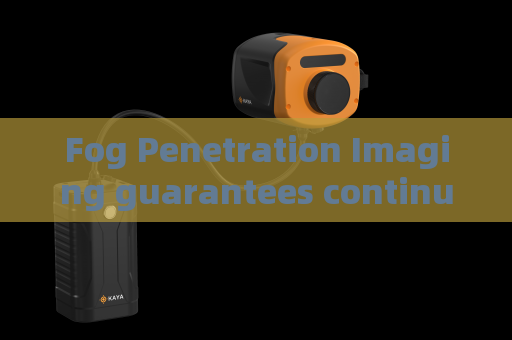
Operational deployment of the Fog Penetration Imager is straightforward and field-proven. The unit is compact enough to be mounted on a tripod or vehicle platform, with a power supply that supports hours of continuous use. In scenarios where mist is intermittent, the imager’s automatic gain control and gate synchronization ensure seamless transition between clear and hazy conditions. Importantly, this device does not rely on any form of radiation beyond visible and near-infrared laser light—it is purely an optical instrument. It cannot penetrate walls, concrete, or metal, nor does it emit X-rays or radio waves. Its strength lies precisely in overcoming the optical interference that compromises conventional cameras. By providing a stable, high-contrast view through mild mist, the Fog Penetration Imager guarantees the continuous observation that police and first responders depend on when every second counts.




