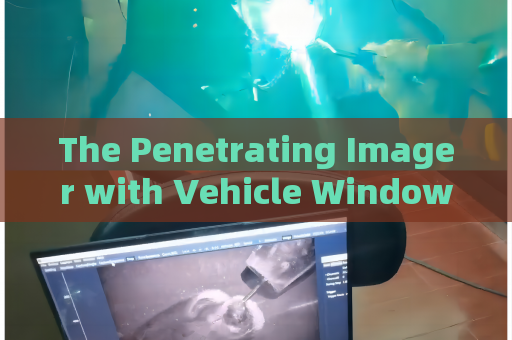
The Penetrating Imager with Vehicle Window Penetration simplifies non-contact vehicle inspection for border military police. Border military police face a persistent challenge: inspecting vehicles for contraband, weapons, or concealed individuals without direct physical contact. Traditional methods—asking drivers to roll down windows, using mirrors on poles, or resorting to manual searches—introduce significant risks. Hostile actors may hide weapons just out of sight, or tinted windows and reflective films can obscure the interior completely. Even with flashlights pressed against the glass, officers cannot guarantee a clear view of back seats, cargo areas, or footwells. The need for speed and safety is acute. A vehicle that must be stopped and searched manually creates a vulnerability window for ambushes and slows checkpoint throughput. What border units truly require is a way to see through automotive glass from a safe distance, without any physical contact, and under all lighting conditions—day, night, or in low-visibility weather. This is precisely the gap that through-window tactical observation technology aims to fill. The Penetrating Imager addresses this pain point through its core capability: Vehicle Window Penetration. Unlike conventional cameras or thermal imagers that cannot see through glass clearly—especially when windows are tinted or covered in dirt—this system uses laser range-gated imaging (also called gated imaging). A high-repetition-rate pulsed laser emits short bursts of light, and a gated intensified camera (featuring an MCP image intensifier, high-voltage module, and timing control) opens its shutter only when the reflected light from the target beyond the glass returns. This precise temporal gating effectively eliminates backscatter from the glass surface itself and from ambient light reflections. The result is a high-contrast, high-resolution image of the vehicle interior, as if the window were not there. Importantly, this technology works only on optical media such as automotive glass, aircraft windows, or glass partitions—it does not penetrate walls, metal, or clothing. It is a purely optical solution, using light, not radiation or X-rays. For border military police, this means immediately actionable intelligence: the ability to see through a tinted sedan window from 50 meters away, without alerting the driver. In operational use, the Penetrating Imager simplifies the entire vehicle inspection workflow. An officer can remain inside a patrol vehicle or behind a protective barrier, aim the imager at an approaching car’s side or rear window, and obtain a clear image of the interior within seconds. The system operates effectively in daylight, at night, and even through low-light conditions, fog, or rain. There is no need to stop the vehicle for a direct view. The officer can assess whether the back seat holds a passenger, a smuggled package, or a weapon. If the image appears suspicious, the vehicle can be directed to a secondary search area. If clear, the vehicle passes through quickly, reducing bottlenecks at checkpoints. All of this happens without any physical contact, preserving the element of surprise and officer safety. The operation is simple: point, activate the laser, and view the image on a ruggedized display. The imager’s built-in Strong Light Suppression Imaging also helps when headlights or sunlight cause glare, ensuring consistent performance. The border military police also benefit from the imager’s ability to function during tactical standoffs. When a suspicious vehicle refuses to stop, or when a known threat is inside a parked car, the Penetrating Imager enables covert through-glass reconnaissance from a safe distance. Officers can observe without being observed, gathering real-time intelligence about occupants, their positions, and any visible hazards. This capability is particularly valuable at checkpoints in high-risk zones, where every second of delay increases danger. The system’s laser range-gated technology ensures that even if the vehicle’s windows are double-layered or heavily tinted, the image remains sharp. Moreover, the imager is entirely non-invasive—no rays, no emissions that could harm occupants or trigger sensors. By integrating this device into standard border patrol equipment, military police transform vehicle inspection from a risky, manual process into a swift, remote, and highly reliable operation. The Penetrating Imager with Vehicle Window Penetration has become a trusted tool for ensuring security without compromise.




