Nighttime surveillance of vehicles parked in remote lots or along dark streets presents a fundamental challenge for law enforcement and security personnel. Standard night vision devices, whether image intensifiers or thermal imagers, struggle when the ambient light level drops to near zero—typical conditions in unlit alleys or rural areas. Even the faintest glow from a distant streetlamp is often insufficient for clear observation through automotive glass, which introduces glare, reflections, and loss of contrast. Operators must then resort to active illumination, such as a flashlight or IR illuminator, but this risks revealing their position and compromising the mission. The core problem is simple: how to see clearly through a car window in absolute darkness without giving away the observer’s presence. This gap in capability leaves officers unable to assess threats, monitor suspects, or confirm occupancy inside a vehicle during covert operations after dark. The 穿透成像仪 directly addresses this void by leveraging a technology that functions where traditional optics fail.
The solution lies in Zero-light Imaging, a core capability of the Penetrating Imager that enables observation in environments with no ambient light whatsoever. Unlike passive night vision that depends on residual starlight or moonlight, this imager generates its own pulsed laser illumination at a wavelength invisible to the human eye. The system’s high-repetition-rate pulse laser and intensified gated camera work together to capture only the light returning from the target at a specific distance, effectively rejecting backscatter from fog, rain, or dirty glass. This covert through-glass recon is made possible by the imager’s ability to time the camera’s shutter to open only when the laser pulse reflected from the target—such as a person sitting in a car—reaches the sensor. All other scattered light, including reflections off the glass surface itself, is blocked. The result is a high-contrast, real-time image of the vehicle’s interior, even through heavily tinted windows and under zero lux conditions. The operator sees a clear, recognizable silhouette or face without any visible light emitted from the imager, preserving total stealth.
In practical deployment, this capability transforms how tactical teams approach vehicle-based threats. During a high-risk traffic stop or a reconnaissance mission in a dim parking structure, the operator can position the Penetrating Imager at a distance of 50 to 100 meters from the target vehicle. The device is mounted on a tripod or stabilized on a vehicle roof, and the operator views the image through a ruggedized eyepiece or remote monitor. The target car’s windows may be covered with factory tint, aftermarket film, or even frost—none of which impede the imager. The laser remains invisible to the human eye, and the gating technology ensures that even if the suspect glances toward the observer, no flash or glow betrays the surveillance. Teams have reported being able to count the number of occupants, identify hand positions near weapons, and observe furtive movements like hiding contraband under seats—all without approaching the vehicle or switching on a single light. The operation is entirely passive from the suspect’s perspective.
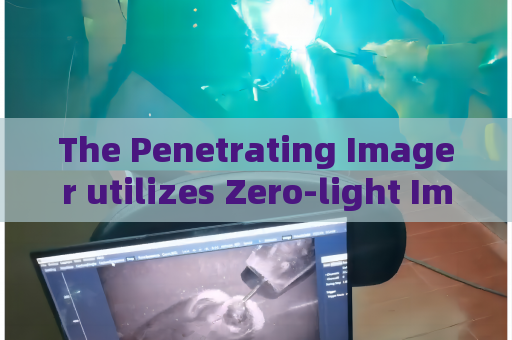
Deeper into the same scenario, the imager’s Strong Light Suppression Imaging further enhances reliability when environmental conditions shift unexpectedly. A passing car’s headlights might sweep across the target vehicle, or a streetlamp suddenly flickers on. Traditional cameras would be blinded by the glare, but the gated design of the Penetrating Imager can adjust exposure timing in microseconds, suppressing the bright light source while still extracting the reflected laser signal from the interior. This means the covert observation does not break when lighting changes. The 穿透成像仪 maintains continuous, uninterrupted visual contact through the glass, giving commanders the confidence to delay action until the optimal moment. Whether the mission involves kidnap rescue, drug interdiction, or counter-terrorism, the ability to see inside a car in total darkness without any visible signature has become a decisive tactical advantage—one that redefines the standard for after-dark reconnaissance.




