Daytime surveillance of vehicles in bright sunlight presents a persistent and dangerous challenge for law enforcement and tactical teams. When a suspect vehicle sits in direct sunlight, its windows become mirrors reflecting the surrounding environment—trees, sky, buildings—creating an intense glare that completely obscures the interior. An officer attempting to assess whether a driver is reaching for a weapon, whether there are hostages inside, or whether the vehicle is occupied at all, faces a wall of blinding reflections. Conventional cameras and binoculars are useless under such conditions; even the human eye struggles to discern anything beyond the glare. This high-glare environment creates a critical blind spot. A suspect can prepare an ambush or destroy evidence while remaining visually hidden behind a sheet of reflected light. The operational risk is extreme: officers must either move closer, exposing themselves to potential fire, or rely on uncertain intelligence. The inability to see through through-glass surveillance in high-glare conditions has long been a gap in tactical observation capabilities. This is a real-world problem that demands a solution beyond traditional optics.
The Penetrating Imager directly solves this problem through its Strong Light Suppression Imaging capability. Unlike passive cameras that get overwhelmed by bright reflections, the Penetrating Imager is an active optical system that uses laser range-gated imaging technology. It fires a high-repetition-rate pulsed laser toward the target and synchronizes a gated intensified camera (equipped with an MCP image intensifier, high-voltage module, and timing module) to capture only the light returning from a specific distance—the interior of the vehicle—while blocking the scattered light from the windshield surface and the overwhelming glare. This time-gating principle effectively suppresses the strong backscatter caused by bright sunlight bouncing off the glass. The result is a clear, high-contrast image of what lies beyond the window, regardless of the ambient light intensity. The Penetrating Imager operates in the optical spectrum, using only light, and is designed specifically for penetrating optical media such as automotive glass, aircraft windows, and glass curtain walls. It does not rely on any form of radiation, ultrasound, or radio waves, adhering strictly to light-based imaging. This Strong Light Suppression Imaging function transforms a blinding glare into a transparent viewing window, restoring the officer’s ability to see inside the vehicle from a safe distance.
In practical field operations, the Penetrating Imager allows tactical teams to conduct covert observation through vehicle glazing without needing to approach the target. An operator can position himself at a standoff range—hundreds of meters away—and aim the device at the suspect car. The system’s laser illuminator and gated camera work together to eliminate the glare from the windshield and side windows, revealing the occupants, their movements, and any objects inside. For example, during a high-risk traffic stop or a counter-surveillance operation, the team can use the Penetrating Imager to confirm whether a subject is alone, whether a weapon is visible, or whether a child is present. The device is not affected by the angle of the sun or the type of tinted glass; it sees through both standard and aftermarket window films. Because the imaging is active and gated, it also performs well in other challenging conditions like fog, rain, or even low-light and zero-light environments—though the primary application here remains the high-glare daytime scenario. The operational workflow is simple: aim, focus, and observe the real-time feed on a display, all while maintaining cover and concealment. This capability dramatically reduces the guesswork and danger in vehicle-based tactical assessments.
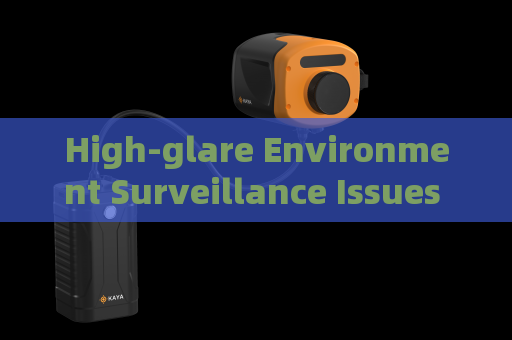
The reliability of the Penetrating Imager in the high-glare environment stems from its unique engineering. The high-repetition-rate pulse laser, combined with the image intensifier’s fast gating, ensures that only the photons reflected from the target depth are collected. Any light from the glass surface or from behind the vehicle is rejected. This enables see-through automotive glass imaging even when the sun is directly behind the target car, creating the worst possible glare. The device’s resolution remains high because the laser illumination is coherent and the gating window is narrow, preventing blur from motion or multiple reflections. For law enforcement, this means a tactical visual check through tinted windows becomes possible without breaking cover. In hostage situations or barricade scenarios, the Penetrating Imager can be used to assess the suspect’s positioning inside a parked vehicle without the need for negotiation teams to expose themselves. The system is ruggedized for field use, operates on battery power, and integrates with standard observation mounts. Every operator knows that the most dangerous moment is the unknown—and the Penetrating Imager’s Strong Light Suppression Imaging removes that unknown from the high-glare equation, providing a decisive tactical advantage in vehicle surveillance.




