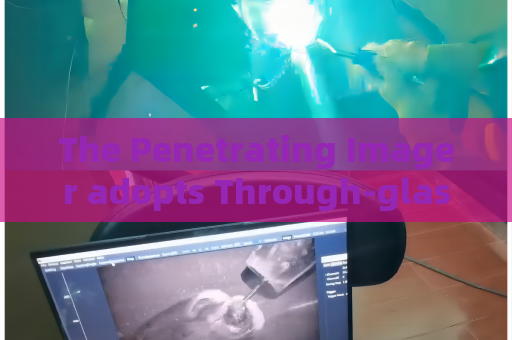
The Penetrating Imager adopts Through-glass Imaging Technology for exterior glass observation of building fire scenarios During a high-rise building fire, exterior glass surfaces such as curtain walls, tempered windows, and storefront panels become critical visual barriers. Firefighters face a fundamental problem: flames, dense smoke, and heat waves reflect off glass, creating blinding glare and obscuring interior conditions. Traditional optical devices fail because glass reflects light back, while thermal imaging cameras struggle to differentiate heat sources through multiple layers of glazing. The real operational pain point is the inability to conduct rapid, safe reconnaissance—crews must either breach glass at close range (risking flashover and injury) or rely on incomplete radio reports from interior teams. Without clear visual access through exterior glass, incident commanders cannot verify fire progression, locate trapped occupants, or assess structural integrity. The Penetrating Imager directly addresses this gap by enabling through-glass surveillance from a safe standoff distance, transforming what was previously a high-risk guess into a data-supported tactical decision. The Penetrating Imager adopts Through-glass Imaging Technology based on laser range-gated imaging principles. Unlike passive optics that depend on ambient light, this system uses a high-repetition-rate pulsed laser to illuminate the target through the glass, coupled with an image intensifier gated camera that shuts out backscatter from the glass surface itself. The core components—a pulsed laser, an MCP image intensifier, a high-voltage module, and a timing sequencer—work in synchrony to transmit only the return signals from objects behind the glass, rejecting reflections and fire-generated glare. This active imaging approach excels at high-contrast imaging through optical media, including vehicle windows, aircraft portholes, and building glass facades. Importantly, the technology operates in the visible-to-near-infrared spectrum, allowing it to cut through fire-generated turbulence, haze, rain, and light smoke—though it cannot penetrate heavy smoke. In a typical building fire scenario, the Penetrating Imager boosts visibility 3 to 5 times through exterior glass, enabling operators to see interior structure, flames, and even human silhouettes that are otherwise invisible. In practice, the device is used from a tactical position 50 to 200 meters from the building. The operator aligns the imaging head toward the targeted glass surface and activates the laser illumination. The gated camera’s timing is adjusted to match the round-trip time of light from the laser to the interior scene and back, effectively “shutting the gate” before scattered light from the glass itself can corrupt the image. This allows real-time observation of fire dynamics behind glass—flame patterns, smoke layer depth, and potential victims near windows—without approaching the dangerous facade. Firefighters can then relay precise coordinates to interior teams or deploy aerial resources accordingly. The system’s Strong Light Suppression Imaging capability also handles direct sun glare or incident flame brightness, maintaining image clarity even when the glass is under thermal stress. All operations are passive from the target’s perspective, making it suitable for covert through-glass recon in scenarios where situational awareness must be gained without alerting occupants or triggering panic. The Penetrating Imager’s role extends beyond initial size-up to ongoing monitoring during suppression. As conditions inside evolve, the same glass surface may become fogged with condensation or coated with soot from the fire. The laser range-gated technology can adapt by adjusting the gate width and gain, still extracting usable images through soiled glass that would render conventional cameras useless. For example, after water application cools the glass, steam may form—the through-glass imaging function cuts through this vapor layer because it focuses on the reflected laser pulse from objects a fixed distance behind the glass. However, operators must remember the limitation: heavy smoke filling the interior space will block the laser completely, so the device works best in pre-flashover or ventilated scenarios. The Penetrating Imager thus becomes a dedicated tool for exterior glass observation in building fires—a focused solution for a single, high-stakes reconnaissance problem. Its ability to see through automotive glass and building curtain walls with equal effectiveness makes it a standard addition to urban firefighting response kits, where the first command decision often hinges on what lies behind a window.




