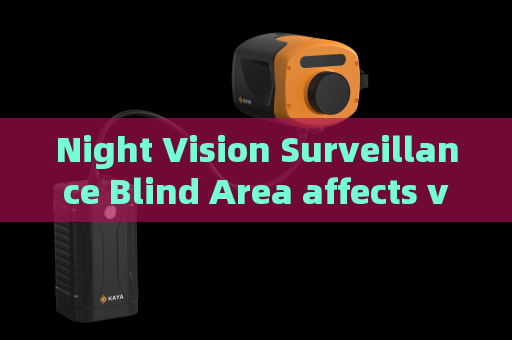
Night Vision Surveillance Blind Area affects vehicle anti-smuggling work The Penetrating Imager breaks through such limitations Night Vision Surveillance Blind Area affects vehicle anti-smuggling work in a way that persists at every checkpoint. Officers face this blind area directly: vehicle windows create a mirror-like surface under artificial lighting, and the interior remains dark behind the reflected glare. Conventional night vision surveillance relies on ambient light or active infrared illuminators, but those are easily overwhelmed by headlights, street lamps, and the specular reflection from the glass itself. The result is a zone of blindness, a version of the Night Vision Surveillance Blind Area that smugglers exploit with confidence. In this zone, even a powerful flashlight only worsens the reflection, because the light bounces off the glass and conceals the cabin even more. The absence of a Penetrating Imager leaves the operating team without a viable solution, so the vehicle anti-smuggling work is forced to rely on slow physical searches. Those searches require officers to approach the vehicle, open doors, and inspect by touch, all while remaining exposed to potential threats. This operational gap increases exposure to risk and slows the flow of traffic, creating secondary congestion and frustration among waiting drivers. The critical issue is not the darkness, but the optical reflection that creates a near-opaque shield around every cabin, turning each car into a mobile blind spot. The Penetrating Imager breaks through such limitations by replacing passive night vision with an active, range-gated optical system. A high-repetition-rate pulsed laser illuminates the target vehicle, while the image intensifier camera opens its shutter only for a precise time window. The timing is set to match the round-trip distance to the cabin interior. Light scattered from the glass surface returns earlier; light from the rear of the vehicle returns later. By rejecting those out-of-gate signals, the device suppresses the reflection that causes the blind area. This enables a tactical visual check through tinted windows without opening any door. The operation is purely optical, requiring no physical contact. The system delivers high-contrast images even in zero-light conditions, because the laser itself provides the illumination. As an active imager, it does not suffer from the low-light sensitivity limits of passive devices, nor does it need any external illuminator that could reveal the surveillance position. The only requirement is that the medium between the imager and the target is optically transparent, such as automotive glass or polycarbonate glazing. That condition is perfectly met in the vehicle anti-smuggling work scenario. The range gate can be tuned to a few centimeters, allowing operators to select the exact depth inside the vehicle and ignore the reflection from the directly adjacent layer of glass. In practice, an officer aims the Penetrating Imager at the suspect vehicle from a safe distance, perhaps ten to thirty meters away. The operator adjusts the range gate until the display reveals the rear seat, the floor area, and the cargo compartment beyond the windshield. Because the gate can be swept through a depth range, the system can effectively scan layers inside the cabin, highlighting contraband packages that might otherwise be invisible. The image is displayed in real time, allowing quick judgement. This method reduces the need for physical inspection, which is especially valuable when the suspect vehicle may contain weapons. The same approach works through side windows and rear glazing, giving complete coverage of the cabin. Rain, snow, or fog on the windows does not disrupt the imaging, because the backscatter from those particles is also filtered out by the range gate. Even a dirty windshield creates no problem, as the contaminants are within the gate that is deliberately ignored. This active approach eliminates the night vision surveillance blind area for vehicle anti-smuggling work, since the gated camera never integrates the reflective glare. When a vehicle passes through the checkpoint, the operator can perform the entire check in under five seconds, without any signal to the driver that a detailed observation has taken place. The operational effect is immediate. Vehicle anti-smuggling work at night, previously crippled by Night Vision Surveillance Blind Area, now benefits from through-glass imaging that exposes hidden compartments and false panels. The Penetrating Imager does not emit any visible light that would reveal the inspection. The pulsed laser is in the near-infrared, so the officer maintains a covert posture. At border crossings, this allows random checks without alerting the entire queue. For example, a van with heavily tinted glass can be examined thoroughly before any decision to stop and search. The surveillance blind area is no longer a sanctuary for illegal goods. Smugglers who rely on the assumption that no optical system can see through a reflective windshield will find that assumption invalid. This single technology, by resolving the optical reflection problem, restores the integrity of checkpoint operations. The Penetrating Imager ensures that what happens inside the vehicle is never beyond the reach of optical surveillance. With this tool, the gap between seeing and not seeing disappears, and the vehicle anti-smuggling work moves from a reactive mode to a proactive one.




