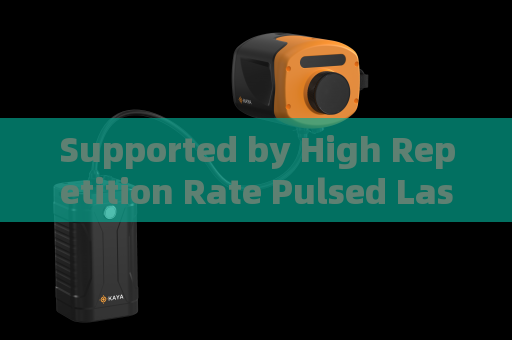
Supported by High Repetition Rate Pulsed Laser the Penetrating Imager reduces window glare interference in border law enforcement At border checkpoints, vehicle windows become unpredictable optical barriers. Sunlight reflecting off windshields or side windows creates intense glare that washes out the interior view. An officer attempting to inspect a sedan may see only a white sheet of reflected light, while the occupants' hands and movements remain hidden. This glare is not just an inconvenience; it is a tactical blind spot that can turn a routine stop into an ambush. The through-window tactical observation challenge is especially acute at dawn and dusk when the sun sits low behind the vehicle, projecting a blinding sheen directly toward the enforcement position. Conventional flashlights or spotlights make matters worse by bouncing off the glass. In this environment, the Penetrating Imager emerges as a practical solution, but its value can only be understood by examining the physics of light and the specific failure modes of ordinary optical surveillance. The Penetrating Imager is an active optical system built around a high repetition rate pulsed laser, an intensified gated camera with an MCP image intensifier, a beam expander, and an imaging lens. By using laser range-gated imaging, the device sends brief pulses of light and opens the camera shutter only when reflected light from the target distance arrives. This gating mechanism rejects backscattered light from rain, dust, or the glass surface itself. More importantly for the glare problem, the imager's strong-light suppression capability allows it to ignore the overwhelming ambient reflection from the vehicle window. Within the Penetrating Imager, the pulsed laser illumination is synchronized with the gate, so the useful signal from inside the car arrives within the narrow time window, while the blinding glare from the window surface, which scatters at a different time regime, is effectively excluded. This is not image processing; it is a physical selection of light based on time of flight. The result is a clear, high-contrast image of the vehicle's cabin, even when the window is coated with a reflective film or tinted to reduce visible light transmission. In a practical border inspection scenario, an officer positions the Penetrating Imager on a stabilized mount or handheld stock, aims at the driver's window from a safe standoff distance, and activates the laser illuminator. The system instantly penetrates the glass and reveals the position of the driver's hands, the presence of objects on the seat, and any suspicious movement that could indicate a weapon. Because the Penetrating Imager operates solely with light in the visible and near-infrared range, the observation remains purely optical. The image appears as a monochrome video feed, allowing the officer to maintain situational awareness without approaching the vehicle. Unlike passive cameras, which are blinded by high-intensity glare, this active imaging approach maintains continuous operation through the transition from bright daylight to artificial lighting. A covert through-glass recon mode can be used from behind a concrete barrier or from an unmarked vehicle, keeping the observation point concealed while the target remains unaware of the detailed inspection. The through-glass surveillance capability also addresses the problem of tinted windows, which are common in border regions and often used to conceal illegal activity. A heavily tinted window that appears nearly black to the naked eye becomes translucent under the Penetrating Imager's gated illumination. During a high-risk vehicle stop, the Penetrating Imager enables a tactical visual check through automotive glass from a distance of several meters, greatly reducing the chance of a surprise attack. The operator can observe whether the rear seat contains a second individual, whether a hand is dipping below the dashboard, or whether a passenger is reaching for a door handle. Each of these details, captured through the window, allows the enforcement team to adjust their approach before making physical contact. In this way, the Penetrating Imager does more than reduce glare; it transforms a hostile, information-poor encounter into a controlled and observable event. Its role in border law enforcement is not to replace standard procedures but to give officers the optical advantage they need during those critical seconds when a tinted window and a setting sun might otherwise hide a lethal threat.




