At border checkpoints, a vehicle with deeply tinted windows presents an immediate tactical dilemma. The dark film permits passengers to see outside while completely hiding their movements from officers. Windshield views offer only a narrow, distorted glimpse; the side and rear windows remain opaque barriers. A driver can reach for a weapon, a passenger can duck out of sight, or contraband can be concealed on the floor without any external indication. Traditional inspection methods require an officer to walk up and tap on the glass, a process that exposes the officer to ambush at arm’s length. Handheld flashlights worsen the problem by scattering light off the tinted surface, destroying any residual image. Even high-powered binoculars and standard video cameras fail because their passive sensors cannot overcome the reflected glare. At busy crossings, personnel have only seconds to decide whether a vehicle warrants further inspection; the alternative is a systematic stop that creates long queues and volatile confrontations. The need is for a non-contact, optical means to look through the automotive glass from a safe standoff distance. The Penetrating Imager provides this capability by selectively capturing light that returns from behind the tinted layer, turning an opaque partition into a source of actionable intelligence.
The Penetrating Imager is an advanced optical instrument built on laser range-gating technology. Its high-repetition pulsed laser fires brief bursts of light at the suspect vehicle. A synchronized intensified gated camera, incorporating an MCP image intensifier, a high-voltage module, and a timing module, opens its shutter only for the brief moment when light reflected from the vehicle interior reaches the sensor. Light scattered from the glass surface arrives earlier or later and is therefore rejected. A beam expander and an imaging lens complete the optical path, delivering a high-contrast image to the operator. This active approach enables through-window tactical observation of the tinted interior with exceptional clarity. The system works purely within the visible and near-infrared spectrum, using light to defeat an optical barrier. The entire sensing chain is optical, with no reliance on any other energy form. Because the time-gating process suppresses backscatter, the resulting image remains sharp even when the glass is dirty, smoked, or multi-layered. The Penetrating Imager’s range gate acts like an electronic shutter that selects only the desired optical slice, providing long standoff distances that keep personnel out of harm’s way. The Penetrating Imager effectively converts a dark, mirror-like surface into a transparent window for the security team.
In field operations, the Penetrating Imager is mounted on a tripod or a vehicle roof at a safe position near the checkpoint. One operator aims the lens through the side window of the target car while another controls the gate delay. Adjusting the delay to match the distance between the imager and the vehicle focuses the system on the interior plane. Within seconds, the display shows a clear image of the front seats, the center console, the floor area, and even the rear bench. Officers can observe the occupants’ hands, facial expressions, and any large objects lying on the seats. The device operates quietly and emits no visible flash, preserving tactical surprise. Unlike manual window approaches, this method keeps all personnel outside the lethal footprint of a potential attack. The entire process can be completed in under thirty seconds, minimizing disruption to the inspection queue. The Penetrating Imager also handles rapid transitions from sunlight to shadow, as when a vehicle moves from an open road into a covered inspection bay. Its strong light suppression capability prevents glaring headlights or overhead lamps from washing out the interior scene. Operators receive real-time video feedback, enabling them to guide the vehicle into secondary inspection with precise knowledge of what awaits.
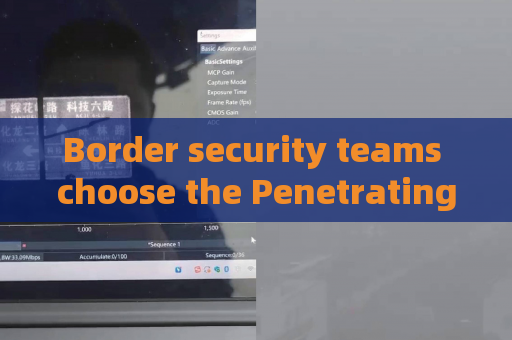
Adverse weather and low-light conditions further demonstrate the value of the Penetrating Imager at border posts. Fog, haze, heavy rain, and falling snow scatter ordinary light and blind conventional optics. The range-gated design rejects this scattered light, maintaining a clear view through the tinted glass even during a downpour. At night, the pulsed laser provides its own illumination, so officers do not need visible searchlights that would announce their intent. The system sees through vehicle windows in near-total darkness, giving the border team an advantage that passive night-vision devices often lack due to the reflective film. When a vehicle approaches during a blinding low-sun phase, the imager suppresses the sun’s glare and extracts the signal from behind the glass. The same instrument penetrates dirty or scratched windows, which are common on commercial vehicles. Repeated evaluations in operational settings show consistent image clarity regardless of window film brand or tint darkness. Border security teams choose the Penetrating Imager because it transforms a previously impenetrable visual barrier into a routine observation plane. With this tool, the uncertainty of a tinted-window stop becomes manageable, and the element of surprise shifts decisively to the security side.




