Border patrol observation over open terrain routinely confronts a persistent adversary: fog. A reconnaissance team positioned on a ridge line may have a clear line of sight to a valley road, yet a dense coastal mist or an early-morning ground fog reduces that view to a grey-white void. Long-distance observation under such conditions becomes a guessing game, with the patrol forced to rely on intermittent gaps in the weather or on reports from other assets. The gap between seeing and not seeing is not merely inconvenient—it creates a tactical blind spot that a smuggler or armed intruder can exploit. In these moments, the standard optical tools of the patrol, daylight binoculars or conventional low-light scopes, fail because the airborne water droplets scatter the returning light back toward the observer. That backscatter washes out the target signal entirely, turning a potential identification into a fuzzy, unreadable shape. The real problem is not the distance, but the medium through which that distance must be viewed.
Fog Penetration Imaging is the function that directly answers this failure. The penetrating imager is an active optical system built around laser range-gated imaging technology, not a passive sensor dependent on ambient light. Its core components, a high-repetition pulsed laser, an intensified gated camera, a beam expander, and an imaging lens, work in a tightly synchronized sequence. The pulse laser fires a short burst of light toward the target area; the gated camera opens its shutter only for the precise time interval required for that specific light pulse to travel to the target and return. Any light scattered by fog particles closer to the imager arrives earlier or later than the gating window and is therefore blocked. This temporal filtering eliminates the backscatter that blinds conventional optics. For border patrol applications, this means the operator can select a range gate that matches the exact distance to the suspect vehicle or person, effectively slicing through the fog layer and retrieving a high-contrast image of the target. The system works at long stand-off distances, delivering clear, resolved detail where a standard telescope would show nothing but white.
In practice, a patrol unit set up on a hilltop can aim the penetrating imager across a mist-filled valley toward a border crossing checkpoint. With the range gate set to two kilometers, the operator watches the target vehicle’s silhouette emerge from the fog, its contours sharp against the darker treeline. A tinted windshield that would hide the driver under clear skies becomes a transparent window under the same gating principle—the laser pulse passes through the glass and reflects off the occupant inside, while the timed shutter rejects the diffuse glow from the fog. The operator can count passengers, observe hand movements, and determine whether a weapon is visible on the seat. This level of detail supports a decision to hold position or call for a ground team, all without revealing the patrol’s presence. The system is fully active, so it does not rely on starlight or moonlight, and its strong light suppression capability keeps the image usable even if the target area includes glaring headlights or a lit checkpoint.
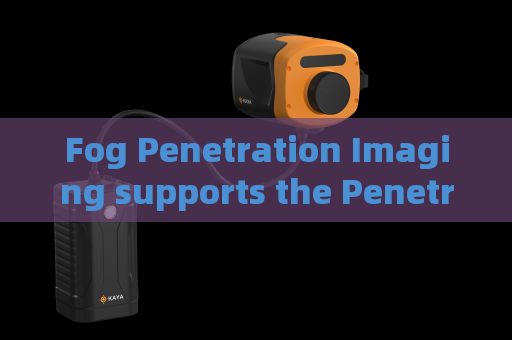
The same tool remains effective when the fog lifts but the observation continues. A rain squall, a blowing snow field, or a haze from distant smoke in a dry season—all of these optical media scatter light in similar ways, and the gate-based rejection approach handles each one. Border patrol observation is not a single-weather mission; it is a continuous watch across shifting conditions. With the penetrating imager in place, a single operator can maintain coverage from the same position through morning fog, midday heat shimmer, and evening drizzle. The patrol does not need to relocate to close the range, because the range gate itself closes the distance optically. Every observation becomes a controlled, repeatable process: set the gate, scan the sector, and record the image for later analysis. The edge gained is not just the ability to see through fog—it is the ability to see the same scene, with the same clarity, at the exact moment when other optical systems go dark.




