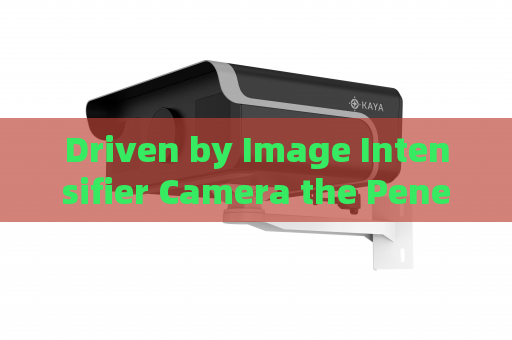
Driven by Image Intensifier Camera the Penetrating Imager supports all-night vehicle checks at military port terminals
At a military port terminal, the flow of supply vehicles never stops after sundown. Security personnel must verify the identity and cargo of every truck entering the restricted zone, yet darkness turns this routine task into a high-stakes challenge. A conventional flashlight beam reflects harshly off laminated windshields, blinding the observer while leaving the cabin interior in deep shadow. Drivers may keep the windows rolled up, and tinted glass further hides the hands, faces, and objects inside. Any delay in inspection creates a bottleneck, but rushing through a check invites concealed threats. The core pain point is not a lack of light—it is the inability to see through the optical barrier of automotive glass under low-illumination conditions without alerting the subject. The through-window tactical observation capability of the 穿透成像仪 directly answers this problem. Unlike passive night vision devices that amplify ambient photons, this active imaging system emits short laser pulses and synchronizes an image intensifier camera’s gate with the reflected light. By doing so, it rejects backscatter from the glass surface and atmospheric particles, permitting a crisp view of what lies beyond the windshield. The operator does not need to approach the vehicle or ask the driver to lower the window. From a safe standoff distance, the imager captures the front seats, the center console, the floor area, and even the rear bench through layered glazing. Its high-repetition pulsed laser and high-resolution gated camera deliver real-time frames that feel like daylight stills, despite the surrounding night at the port. In actual operation, a checkpoint officer mounts the 穿透成像仪 on a stabilized tripod beside the inspection lane. As a truck rolls to a stop, the operator aims the lens at the windshield and presses the trigger. Within seconds, a clear image appears on the display: the driver’s hands resting on the wheel, a cardboard box on the passenger seat, a jacket draped over the gear lever. If the initial angle is blocked by a steering wheel column, the operator shifts the tripod slightly and repeats the scan through the side window. The instrument’s adjustable range gate lets the user fine-tune the focal slice, ensuring that reflections from the glass or rain droplets on the surface do not obscure the scene. This method eliminates the need for tactical flashlights or physical door opening during the pre-screening phase, reducing both risk and friction. Beyond basic visibility, the 穿透成像仪 proves its worth in prolonged night operations at the terminal. A single checkpoint may process dozens of vehicles over an eight-hour shift, and the system’s strong light suppression ensures that oncoming headlights from another lane do not wash out the imagery. When fog rolls in from the harbor, ordinary cameras lose contrast, but the gated laser approach slices through the haze over the operational distance. Every scanned vehicle yields a timestamped record, useful for later review if a suspicious item appears after the truck has moved to the holding area. The port’s security team thus maintains a continuous, non-intrusive surveillance loop that turns every window into a clear observation port, from dusk until dawn.




