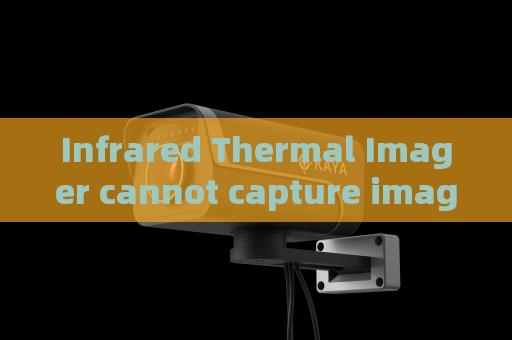
Infrared Thermal Imager cannot capture images behind tinted glass The Penetrating Imager makes up for law enforcement surveillance gaps A patrol unit arrives at a parking structure after receiving a report of a suspected armed individual resting inside a sedan. The vehicle's side windows are tinted to a degree that defeats visual inspection from every angle. Officers attempt to use an infrared thermal imager to determine whether the occupant is asleep, injured, or preparing an ambush. The thermal imager returns only a blurred silhouette or, in many cases, nothing usable at all. Tinted glass absorbs and reflects the long-wave infrared energy that such devices depend upon, leaving law enforcement with a critical blind spot at the precise moment when situational awareness matters most. This scenario repeats itself in traffic stops, narcotics surveillance, and barricade incidents across the country. The inability to see through automotive glazing forces officers to choose between approaching blind or waiting indefinitely, and both options carry unacceptable risk. A determined individual behind tinted glass enjoys a permanent advantage until the moment of contact. The Penetrating Imager exists precisely to close this dangerous gap. The Penetrating Imager is an active optical imaging system built around laser range-gated imaging technology, also known as gated imaging. A high-repetition-rate pulsed laser illuminates the target through a beam expander, while an image-intensified gated camera, containing an MCP image intensifier, a high-voltage module, and a timing module, receives light through the imaging lens. The timing module synchronizes the laser pulse with the camera shutter, so the sensor accepts only light returning from a specific distance band. This mechanism rejects backscattering and suppresses the bright reflections generated by the glass surface itself. Vehicle Window Penetration is achieved because the imager measures the time-of-flight of returning photons and gates out the early reflections from the glazing. The resulting image shows the vehicle interior with high contrast and sharp resolution, regardless of whether the glass is factory-tinted, aftermarket-darkened, or coated with a reflective film. In operational practice, an officer positions the Penetrating Imager at a standoff distance, rests it against a stable surface, and aims it through the tinted side window of the suspect vehicle. The active laser beam passes through the glass and illuminates the cabin. The gated camera opens its shutter only when light returns from the depth of the interior, excluding the reflection from the outer window pane. What appears on the display is a clear monochrome view of the occupant, showing seating position, hand placement, and any objects held or resting nearby. The operator can confirm whether a subject is gripping a firearm, reaching toward the center console, or slumped in an unconscious state. This capability transforms an opaque tinted window into a fully observable port. The imaging frame rate is high enough to follow deliberate movement, such as a hand sliding beneath a seat cushion. Because the Penetrating Imager carries its own pulsed laser illumination, it functions equally well in broad daylight and in zero-ambient-light conditions. It also handles glare from direct sunlight striking the glass, delivering an image that would be impossible with passive sensors. The entire sequence requires no physical approach closer than the standoff distance, keeping the officer out of reach of any potential threat. The advantage in a tactical context is substantial. A special response team conducting a high-risk vehicle stop can perform a tactical visual check through tinted windows before any physical approach, identifying the subject's exact position and confirming whether a second occupant hides in the rear seat. A patrol officer investigating a suspicious parked car can verify that both hands remain on the steering wheel rather than disappearing below the window line. The Penetrating Imager fills the surveillance void that the infrared thermal imager cannot bridge. Where thermal devices fail against tinted glass, this active optical instrument provides through-glass surveillance that protects officers and supports informed decision-making. The instrument converts a known vulnerability into a controlled observation window, and law enforcement units that deploy it gain a decisive measure of safety during vehicle-related operations.




