At a busy checkpoint, the demand for constant vehicle flow clashes with the need for thorough security checks. A stopped car means officers must approach the window, peer inside, and often ask the driver to roll down the glass. This process creates long queues, exposes personnel to close-range threats, and gives suspects a moment to hide or alter behavior. In high-risk scenarios, every second of delay at the window increases danger. The core problem is clear: conventional inspection assumes a stationary vehicle and a cooperative subject. Law enforcement needs a way to see inside a moving car without interrupting its path, while still detecting concealed occupants or objects. The Penetrating Imager changes this equation by using light itself to defeat the only barrier that matters—automotive glass.
Vehicle Window Penetration is the defining function in this context. The Penetrating Imager is an active optical system based on laser range-gated imaging. A high-repetition pulsed laser illuminates the target area, while an intensified gated camera, synchronized with the laser pulse, captures only the reflected light from a precisely selected distance. This gating mechanism suppresses backscatter from rain, dust, or the glass surface itself, allowing the system to form a clear image of the cabin interior beyond the window. Unlike passive cameras that struggle with reflections or tinted films, the imager actively controls the illumination and the gate timing. The result is a high-contrast, high-resolution view through the windshield or side window, even when the vehicle is moving at moderate speed. For through-window tactical observation, this capability means the car does not need to stop for the inspection to begin.
During live operations at a highway checkpoint, the system is mounted on a gantry or roadside pole, angled toward the approaching lane. As a vehicle enters the scanning zone, the imager fires a sequence of laser pulses and records the gated reflections from the plane behind the glass. The operator watches a real-time display that shows the driver, passengers, and rear seat area with remarkable clarity. The vehicle continues rolling through at 20 or 30 kilometers per hour, and the entire inspection takes less than two seconds. If the scene inside matches the expected profile, the vehicle passes without deceleration. If the imager reveals an anomaly—an extra person hunched in the footwell, a suspicious shape under a seat, or a driver whose movements contradict the traffic pattern—the operator can discreetly signal a secondary bay for a manual check. This approach reduces queue lengths and, more importantly, keeps officers away from the vehicle during the initial assessment.
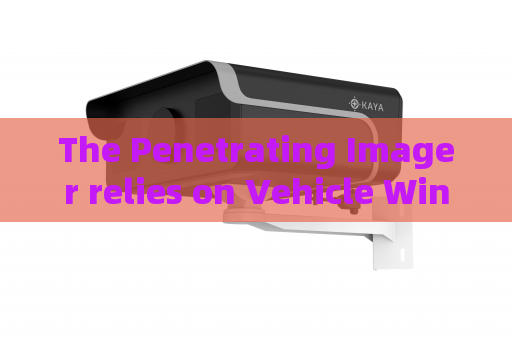
Even in difficult lighting or weather, the Penetrating Imager maintains its advantage. At night, the active laser illumination provides zero-light imaging without relying on ambient lighting. During heavy rain or fog, the range-gating removes most of the scattered light from precipitation between the imager and the car. Tinted or dirty windows, often the biggest obstacle for conventional cameras, become nearly irrelevant because the gate selects only the light reflected from the targeted depth. The system’s ability to see through automotive glass is strictly an optical capability—it does not use any form of penetrating radiation beyond visible and near-infrared light. The Penetrating Imager therefore delivers a practical, non-contact inspection method that turns every moving vehicle into a transparent observation target. The checkpoint becomes a smoother, safer, and more efficient threshold, where the decision to stop is based on evidence seen through glass, not on guesswork.




