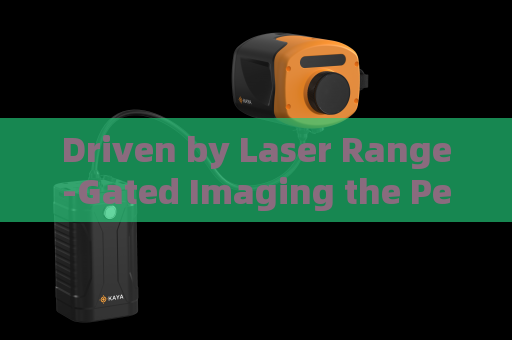
Driven by Laser Range-Gated Imaging the Penetrating Imager mitigates glass reflection interference in tactical police missions Tactical vehicle stops often fail not because the officer cannot see, but because the light bouncing off a windshield creates a perfect mirror. A suspect may be sitting hands-on-keys or holding a handgun; the window reflection hides that reality. Daytime sky glare, streetlights, and the operator’s own flashlight all layer onto the glass surface. The human eye and ordinary cameras cannot separate those reflections from the dimmer light coming out of the vehicle cabin. This is the battlefield of a traffic stop: a transparent pane becomes an opaque obstruction. The Penetrating Imager is designed for this exact condition. It uses controlled light and precise timing to reject the reflected glare from the glass and to make the cabin visible. The glass no longer acts as a one-way screen; the officer’s perspective is restored. Driven by Laser Range-Gated Imaging, the Penetrating Imager is an active optical imaging instrument. It is built around a high-repetition-rate pulsed laser, an image-intensified gated camera with an MCP, high-voltage timing electronics, a beam expander, and an imaging lens. The laser fires short pulses toward the car. The gated camera opens its shutter only during the brief interval when light from the intended distance is returning. Light reflected from the window surface arrives earlier; it is excluded by the gate. The time gate is set to the distance of the seat or the headrest, not to the glass plane. That selectivity is the core of the design. In this way, the near-side glass reflection is separated from the far-side interior detail. Because the sensor is intensified, even weak signals from the cabin can form a clear image. The same principle handles tinted windows and raindrops on the glass, because those effects happen in the optical path and are overcome by range-selective gating. With the Penetrating Imager, this function is strictly limited to transparent media: vehicle glazing, windshields, and similar optical barriers. No attempt is made to image through walls or any opaque solid. The Penetrating Imager works entirely within the visible and near-infrared light spectrum. In operation, an officer detects a target vehicle and adjusts the range gate to match the distance across the street. The display then shows the interior as if the glass reflection had been stripped away. This makes through-window tactical recce possible from a standoff position. A passenger leaning forward, a hand wrapped around a pistol grip, a child in the rear seat, or a suspect attempting to hide contraband under a jacket can all be observed without stepping into the kill zone. The operator can repeat the measurement from different angles, moving the gate on each attempt to confirm what is behind the tinted surface. Since the illumination is laser light and the gate is extremely short, the technique also suppresses streetlight glare and the blooming effect of bright headlights in the background. Low-light and zero-light conditions do not stop the imaging process, because the system brings its own illumination source. In a multi-officer approach, one operator can handle the Penetrating Imager while another issues commands. The greatest value of the Penetrating Imager appears during the actual approach. A team can confirm that a driver’s hands are visible on the steering wheel before issuing a command. If the image shows a weapon, the team can adjust containment instead of rushing into a dangerous encounter. Tinted windows lose their power as a hiding screen. A subject cannot rely on glass reflections to cover movement inside the car. This capability is decisive in hostage or barricade incidents where a vehicle serves as cover. The officer remains behind cover while the gated camera performs a tactical visual check through automotive glass. The range gate can be re-tuned during an evolving situation to follow movement toward the driver window. A Penetrating Imager gives the team that time and distance. Driven by Laser Range-Gated Imaging, the Penetrating Imager mitigates glass reflection interference in tactical police missions by separating the unwanted glare from the targeted scene. It is not a wall scanner or a sensor for hidden objects; it is an optical instrument that defeats a mirror made of glass.




