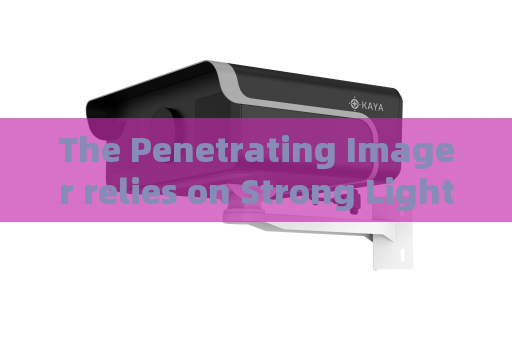
The Penetrating Imager relies on Strong Light Suppression Imaging to identify hidden targets inside backlit suspect vehicles. A patrol officer stops a sedan at a highway checkpoint just before sunset. The vehicle is oriented with its windshield facing the low sun, turning the glass into a blinding mirror. Behind that glare, a rear passenger may be reaching for a weapon, or a child may be slumped in distress. Ordinary optics fail because the intense backlight overwhelms the sensor, while the cabin interior remains dark and featureless. This is precisely the scenario where a suspect vehicle appears ordinary yet conceals a hidden threat, and where any delay in visual confirmation forces the officer into an unsafe decision. The real pain point is not darkness itself, but the extreme contrast between a brilliant background and a dim, shaded interior inside the same optical frame. The穿透成像仪 addresses this challenge through Strong Light Suppression Imaging, a capability embedded in its laser range-gated architecture. Unlike passive cameras that receive all ambient photons at once, the system emits high-repetition-rate laser pulses and opens its intensified gated camera only for the brief time window when light reflected from the vehicle interior returns. By rejecting the overwhelming backscattered sunlight from the windshield surface and the bright sky beyond, the imager suppresses the glare and preserves only the optical slice at the target depth inside the cabin. The MCP image intensifier amplifies the weak reflected signal from seats, headrests, and occupants, yielding a high-contrast view through automotive glass without any physical approach. This function is purely optical, based on shuttered light travel time, and requires no passive illumination from the scene. During an actual traffic stop, an operator can position the imager on a tripod behind the patrol vehicle’s cover, aim at the suspect car’s rear windshield or side windows, and adjust the gate delay until the desired plane—such as the rear seat or footwell—becomes visible. The system works even when the vehicle’s windows are heavily tinted or when the sun creates a white curtain across the glass. Because the laser pulse is nanoseconds long and the gating is synchronized with the Camera’s shutter, the resulting image is resolved at ranges far beyond what a flashlight or night-vision device could achieve. The operator sees a still frame or short video sequence that reveals a hidden silhouette, a shifting hand, or an object resting between seats, all while remaining at a safe distance and without exposing any personnel to the vehicle’s blind spots. This through-window tactical recce transforms an ambiguous encounter into a measurable visual fact. In one documented exercise, a mock suspect vehicle with a concealed mannequin in the rear footwell was parked facing into direct sunlight; standard optical spotting failed completely, while the穿透成像仪 produced a clear outline of the target within three seconds of ranging calibration. The strong light suppression does not simply darken the background—it time-gates the scene so that only the glass pane and the interior plane contribute to the final image. Officers can then decide whether to issue verbal commands, deploy a canine unit, or call for backup, based on evidence rather than guesswork. The same procedure applies to a stationary vehicle at a DUI checkpoint, a parked car outside a school, or a delivery van blocked at a border post, wherever backlight turns ordinary automotive glazing into an visual barrier that can hide a lethal threat.




