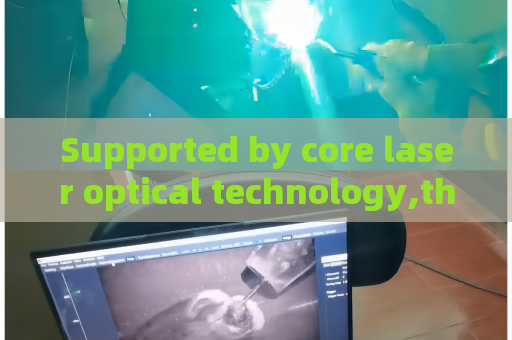
Supported by core laser optical technology, the Penetrating Imager acquires clear images behind military vehicle windshields. Military checkpoints and convoy security teams face a narrow, high-risk reconnaissance problem when a vehicle approaches with tinted, coated, or dust-covered windshields. The windshield is an optical barrier, but it is also a decision point. Armed occupants, restricted visibility, dashboard glare, sun reflection, rain, fog, and road grime can turn the glass into a mirror. Ordinary cameras often record the reflection from the outer surface rather than the scene inside. Personnel who approach to look through the glass lose standoff distance and may be exposed to a threat that remains hidden until the vehicle is close. The Penetrating Imager is designed for this exact situation: it seeks clear images behind military vehicle windshields without opening a door, tapping on glass, or placing an operator in front of the vehicle. The purpose is not general surveillance. It is a focused optical assessment of the occupant compartment and visible items behind the windshield. The Penetrating Imager uses laser range-gated imaging, also called gated imaging, to separate the wanted light from the unwanted light. A high-repetition-rate pulsed laser sends short light pulses toward the vehicle. A beam expander shapes the beam, while an image-intensified gated camera with an MCP image intensifier, high-voltage module, and timing module opens its gate only for the brief moment when light returns from the selected range. Light scattered by the windshield surface, rain, fog, dust, or other intervening optical media arrives at different times and is largely rejected. The result is an active imaging system with high contrast, long range, high resolution, and strong anti-interference performance. It can work through vehicle glass, tinted windows, and windshields, and it can also operate in low light or through fog, haze, rain, and snow. This capability supports through-window tactical observation by giving an operator a clearer view of occupants and visible objects behind the glass. In practice, a security element at a checkpoint or convoy halt can mount the Penetrating Imager on a tripod or vehicle platform and aim it at the approaching windshield. The device produces a real-time image that can be viewed on a monitor and recorded for later review. From a protected position, the operator can assess the driver’s position, passenger seating, hand placement, loose equipment, and any weapon or object held in plain view behind the glass. The assessment can be made at standoff, before the vehicle reaches the inspection point. The Penetrating Imager acquires clear images behind military vehicle windshields even when glare, tint, or bad weather would defeat a standard camera. That early visual check helps a patrol decide whether to wave the vehicle forward, direct it to a search lane, or move to a higher level of control. The system does not replace physical search or tactical procedures. It adds a fast optical layer that reduces surprise and protects personnel from unnecessary exposure. The same windshield scenario demands clear limits. The Penetrating Imager works through optical media such as glass, including vehicle windshields and tinted windows. It does not see through opaque armor, metal, wood, concrete, or any non-transparent solid barrier. If a windshield is covered by an opaque screen, heavy mud, or a solid external plate, no optical system can recover the scene behind it. Rain, fog, haze, and snow can be managed through gated imaging. Within those boundaries, the Penetrating Imager gives checkpoint and convoy teams a disciplined way to inspect a military vehicle windshield from a safer distance. The image is not a guess or a silhouette; it is an optical picture built from laser light returned from the target range. Used with standard challenge procedures, it supports faster decisions, better documentation, and a lower risk of ambush during vehicle inspection.




