Bonded zone checkpoints operate under continuous pressure. Commercial vehicles arrive in dense queues, each requiring customs control, driver identification, cargo manifest verification, and confirmation that no unauthorized person or undeclared item is moving through the controlled perimeter. The most time-consuming visual check often begins at the cab and rear windows. Tinted glass, solar film, rain streaks, dust, night conditions, and strong reflections turn a simple look into a dark, ambiguous image. Officers may see only mirrored sky, headlights, or a black rectangle. Opening every door solves visibility but creates delay, raises safety risk, breaks cargo seals, and disrupts logistics schedules. Smugglers and unauthorized passengers exploit exactly this gap, relying on glazing and bad weather to hide activity in plain sight. The penetrating imager is designed for this bottleneck: rapid optical inspection through vehicle glass without forcing immediate physical access.
The relevant capability is through-glass imaging technology built on laser range-gated imaging. The penetrating imager is an active optical system. A high-repetition pulsed laser illuminates the target; a gated image-intensified camera, containing an MCP image intensifier, high-voltage module, and timing module, opens its shutter for a precise time slice. A beam expander and imaging lens shape and receive the returned light. This time-gating selects light coming back from the vehicle cabin while rejecting reflections from the glass surface, rain, fog, haze, snow, and other backscatter. The result is a high-contrast, high-resolution, long-range image. The method works through windscreens, side windows, rear glazing, and other optical media. It does not pass through metal, wood, dense cargo, or opaque solid barriers. At a bonded zone lane, this function supports through-window tactical observation of occupants, seat rows, footwells, dashboard areas, and visible items.
In operation, the unit can be mounted on a checkpoint pillar, overhead gantry, or mobile tripod beside the inspection lane. The operator sets the range gate for the vehicle hull and cabin depth and views the return on a monitor. A vehicle approaches; the pulsed light crosses the glass and returns from interior surfaces. The gated camera suppresses the dazzling flash from window reflection, so tinted rear glass no longer becomes a blind mirror. Officers can count occupants, check for shapes inconsistent with the manifest, and observe whether visible cargo matches declarations. The vehicle can often remain closed, engine idling, with the driver inside. Compliant traffic clears faster. Suspicious vehicles receive targeted physical inspection. During rain, fog, or night shifts, the same optical gating maintains usable contrast, while conventional lights or manual peering fail. The technology does not reveal what is hidden behind metal panels or packed solid goods, so it is used as a triage tool, not as a substitute for lawful search.
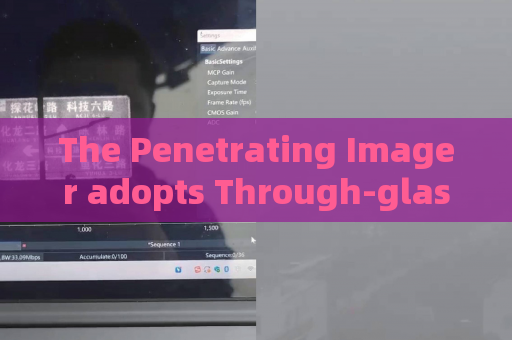
For bonded zone security, the value lies in speed and decision quality. This capability gives officers a chance to resolve window-level ambiguity before committing to a full stop, door opening, or cargo unload. Through-glass imaging technology preserves the controlled nature of the zone: drivers remain in cabs, seals remain intact, lanes keep moving, and officer exposure to traffic decreases. A checkpoint can prioritize the small number of vehicles showing unexplained silhouettes, mismatched occupant counts, or visible undeclared goods. The penetrating imager supports this workflow with an optical, non-contact method that respects the limits of glass and atmospheric obscurants. It cannot replace manifest review, canine teams, or physical inspection where solid concealment is suspected. It can make those resources sharper by directing attention to the right vehicle at the right moment. In the daily reality of bonded zone screening, that difference translates into shorter queues, stronger perimeter discipline, and a clearer view through the glass.




