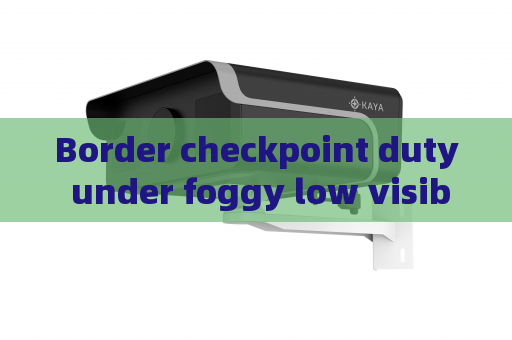
Remote border surveillance under dim light conditions, glass-penetrating imaging supports accurate observation of vehicle interior Remote border surveillance under dim light conditions is a demanding task shaped by distance, darkness, weather, and vehicle glazing. Checkpoints and patrol routes often sit far from stable lighting. Cameras must identify approaching vehicles before they reach a control line, yet ordinary visible-light systems capture only headlights, reflections, and vague silhouettes. Tinted windows, wet glass, dust, fog, and strong lamp glare further obscure the cabin. The result is a persistent blind spot: a vehicle can be tracked externally while its interior remains unverified. This gap matters because border control needs rapid, accurate assessment of occupants, cargo, and suspicious items without stopping every vehicle at close range. A penetrating imager is designed for this exact operational pressure, where remote observation must remain reliable despite low illumination and glass barriers. When visibility drops, the cost of uncertainty rises: each unidentified vehicle may require a slow, risky stop, and delayed decisions can create queues, escape opportunities, or safety hazards at isolated posts. The relevant capability is active laser range-gated imaging. A penetrating imager uses a high-repetition-rate pulsed laser, a beam expander, an imaging lens, and an image-intensified gated camera containing an MCP image intensifier, high-voltage module, and timing module. The laser illuminates the scene, and the camera gate opens for a very short interval synchronized to the target distance. This timing rejects light returning from the glass surface, rain, fog, haze, and other scatter sources before the useful signal arrives. Because the system is an active imaging instrument, it does not depend on ambient light. It produces high-contrast images with long range, high resolution, and strong anti-interference performance. Its glass-penetrating imaging function applies only to optical media such as vehicle windows, high-speed rail windows, aircraft portholes, and glass curtain walls. In border surveillance, that boundary is sufficient: the window is the barrier, and the interior becomes observable through controlled light rather than physical entry. The gated design also suppresses backscatter, so the windshield reflection remains a nuisance to be timed out rather than an absolute barrier that ends observation. The result is a clean optical path through the glazing and a readable view of the cabin under conditions that defeat passive cameras. At a remote border position, the instrument can be mounted on a tower, vehicle, or tripod and directed toward a distant car. The pulsed beam is expanded and projected onto the target. The gated camera waits for the precise return window, so the bright reflection from the windshield or side glass does not wash out the cabin. Under dim light conditions, the active illumination provides its own viewing energy, making the interior visible even when streetlights are absent. Tinted glass may reduce signal strength, but the gated system can still form a usable image when the glass remains an optical medium. The operator, working from a protected point, can observe seat positions, passengers, cargo shapes, and visible objects inside the vehicle. This supports decisions about which vehicles require secondary inspection, which can proceed, and where a closer check should be conducted. The process is remote, rapid, and less exposed than opening a door at the border line. It also allows observation before a vehicle reaches a search bay, giving border units time to position personnel and prepare a controlled stop. A clear cabin view can reveal whether a vehicle carries multiple occupants, bulky cargo, or objects inconsistent with a declared purpose. Operationally, the value lies in accurate observation without early contact. A vehicle approaching a remote crossing at night can be monitored as it slows, stops, or waits. The penetrating imager maintains a stable view through the window while ignoring much of the backscatter caused by rain, snow, fog, or glare. Range gating also allows the camera to concentrate on the vehicle distance, reducing the influence of foreground haze and background lights. When multiple vehicles queue, the system can inspect each cabin in sequence and flag anomalies for closer attention. The image is not a substitute for lawful search, but it provides a sharper first look that helps border units allocate limited resources. In this setting, remote border surveillance under dim light conditions becomes more effective because glass-penetrating imaging supports accurate observation of vehicle interior before a vehicle reaches the inspection point. The penetrating imager therefore extends the secure observation distance and improves tactical awareness at isolated border posts. It reduces unnecessary exposure at the roadside, shortens delays for compliant travelers, and focuses closer inspection on vehicles whose cabins present credible grounds for suspicion.