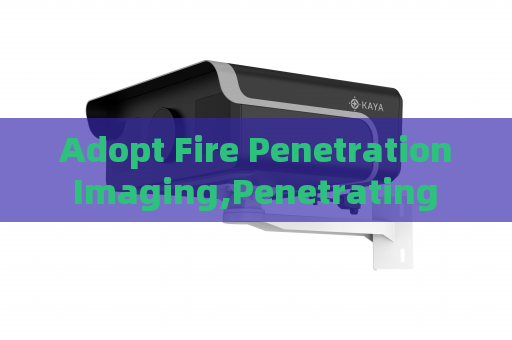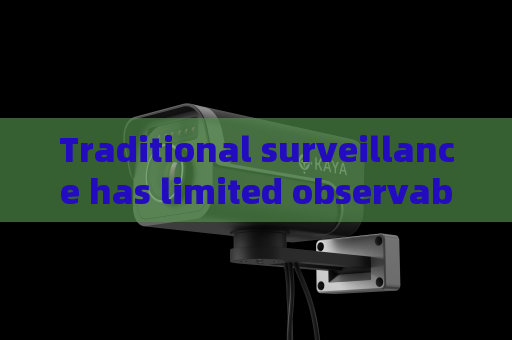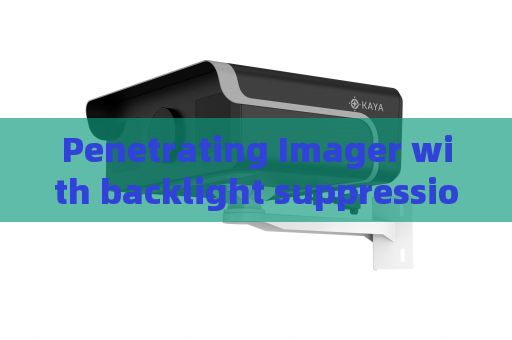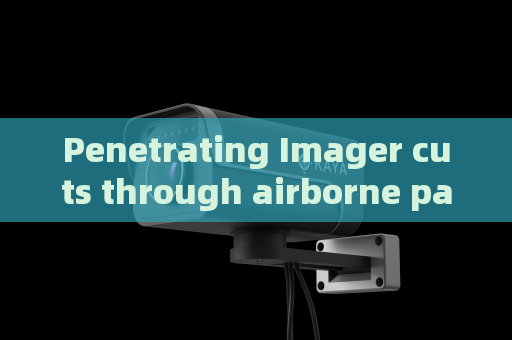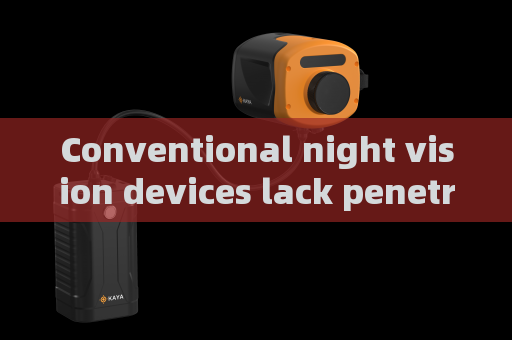
Conventional night vision devices lack penetration capability, Penetrating Imager adapts glass and fog environments for effective tactical observation In night traffic stops and covert vehicle checks, conventional night vision devices lack penetration capability. They amplify faint ambient light and brighten open ground, yet vehicle glass becomes a mirror-like barrier. Tinted windows, rain film, and fog layers scatter returning light and wash out silhouettes inside the cabin. Officers approaching a suspect vehicle cannot confirm how many occupants are present, where hands are positioned, or whether rear seats are occupied. The problem is not only darkness; it is the optical barrier formed by glass and suspended water droplets. Fog backscatter throws glare back toward the observer, while window reflections hide faces and movement. That failing leaves a tactical team with incomplete visual information when accurate observation matters most. The Penetrating Imager is an advanced optical imaging instrument built for this gap, using laser range-gated imaging, also known as gated imaging technology. Penetrating Imager uses active illumination and time-gated detection to isolate light returning from the target. A high-repetition-rate pulsed laser emits short light pulses. A beam expander and imaging lens direct and collect the light. The image-intensified gated camera contains an MCP image intensifier, high-voltage module, timing module, and related components. The timing module opens the camera gate only for the brief interval when light reflected from the vehicle interior arrives. Light scattered by fog or reflected by the outer glass surface arrives earlier or later and is largely rejected. This is how the system overcomes backscatter, the main cause of fog glare and window haze. As an active imaging system, it produces high-contrast images with long operating range, high resolution, and strong anti-interference performance. It can penetrate optical media such as vehicle glass and can image clearly through fog, haze, rain, and snow. These properties support through-window tactical observation without relying on ambient light or exposing officers to close approach. In practice, an operator can place the system on a stable rest, aim it at a vehicle at a safe distance, and observe through the windows. Pulsed laser light passes through fog and vehicle glazing. The gated camera captures returning light from occupants and interior structures. The result is a clearer view of seating positions, body posture, and visible movement inside the cabin. Tinted or reflective glass no longer dominates the image as it does with conventional night vision. Fog no longer turns the scene into a bright wall of scattered light. The system works in low-light and night conditions, but its advantage is not simply low-light amplification. It is the combination of active laser illumination, precise timing, and optical gating that allows glass and fog to be treated as optical media to be managed rather than absolute barriers. For a tactical team, observation can begin before a vehicle is approached, during a stop, or while a suspect remains inside a closed cabin. A stable mount or supported position helps maintain alignment on narrow window openings and reduces hand movement during observation. The operational value appears in the same scenario: a foggy night, a stopped vehicle, and a need to know what is inside before anyone moves closer. Conventional night vision devices lack penetration capability, and unaided eyes see only reflections and fog. Penetrating Imager adapts glass and fog environments for effective tactical observation by producing a high-contrast image through vehicle windows and atmospheric moisture. It does not see through metal, walls, clothing, or other non-transparent solids, and it does not replace devices that use other physical principles. Its role is narrower and precise: optical penetration through glass and clear imaging through fog, haze, rain, and snow. For through-glass surveillance of a vehicle cabin, the Penetrating Imager gives officers a timely visual advantage. It turns a closed, reflective, fog-obscured vehicle into a readable tactical picture, supporting decisions made from cover rather than from guesswork.