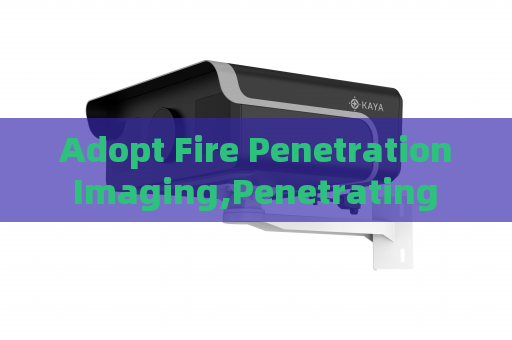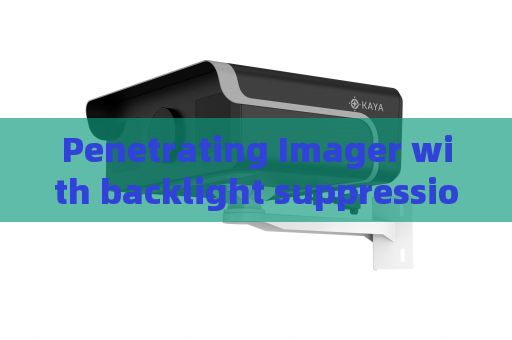
Penetrating Imager with backlight suppression capability for highway checkpoint surveillance to identify obscured vehicles and hidden suspects Highway checkpoints often operate under punishing optical conditions. A low sun can sit directly behind an approaching vehicle, while high-beam headlights, wet pavement, windshield reflections, and tinted side glass combine to erase cabin detail. Standard cameras clip highlights and crush shadows, turning occupants into dark silhouettes. Reflective privacy glazing can hide a passenger, a concealed object, or a suspect crouched below the window line from routine visual screening. Rain, fog, haze, and road spray add scattered light that further reduces contrast. The operational problem is narrow but urgent: officers must detect obscured vehicles and hidden suspects through vehicle glazing without stopping every car for a manual search. A Penetrating Imager addresses this optical surveillance challenge directly. It is designed for the checkpoint lane, where traffic keeps moving and decisions must be made in seconds. The Penetrating Imager is an advanced optical imaging instrument built on laser range-gated imaging, also known as gated imaging. A high-repetition-rate pulsed laser sends short light pulses toward the target lane. A beam expander shapes the illumination, and an image-intensified gated camera receives the returning light through an imaging lens. Inside that camera, an MCP image intensifier, high-voltage module, and timing module open the gate for a very brief interval synchronized to the pulse return. Light arriving outside that interval, including continuous glare from the sun or headlights and backscatter from rain, fog, or spray, is largely rejected. Strong Light Suppression Imaging gives the system its backlight suppression capability. Because the imager is an active system, it delivers high-contrast images, long working distance, high resolution, strong anti-interference performance, and effective suppression of backscattering. It works through optical media such as vehicle windows, tinted glass, aircraft portholes, and glass curtain walls. At a highway checkpoint, through-glass surveillance can reveal occupants and visible objects inside a vehicle even when reflections and bright backlight would defeat ordinary cameras. The gated timing also limits the influence of light returned from rain, fog, haze, snow, and road spray, so the cabin remains more legible than conventional video. In practical checkpoint use, the unit can be mounted on a gantry, a tripod, or a patrol vehicle. The operator selects a range gate matched to the windshield, side window, or rear glazing. The resulting real-time image shows seat rows, footwells, rear compartments, and occupants who would otherwise be hidden by tint, glare, or weather. Backlight from a setting sun or oncoming headlights no longer blooms the sensor. Rain, fog, haze, and snow are optical disturbances that the gated system can see through with greater clarity. Officers can perform a tactical visual check through tinted windows before deciding whether a vehicle requires secondary inspection. Multiple windows can be examined in sequence as a car rolls slowly through the lane. The image can be recorded with time and lane information, giving supervisors a clear basis for directing a specific vehicle to a search area. This supports faster lane throughput and more focused intervention, because the image evidence points to a specific window or seating position rather than a general suspicion. The same optical limits define correct use. The imager sees through transparent or partially transparent media; opaque structural surfaces remain outside optical access. A suspect hidden behind a solid door panel, an opaque partition, or a dense covering will not be revealed by this instrument. Its value at the checkpoint lies in exposing what backlight, tint, reflection, rain, fog, or haze has concealed behind glass. Operators can compare cabin details across multiple windows, watch for movement, and coordinate with lane officers in real time. The system can be paired with checkpoint procedures that separate ordinary glare-related uncertainty from genuine concealment. The Penetrating Imager therefore fills a specific gap in highway checkpoint surveillance: identifying obscured vehicles and hidden suspects through vehicle glazing while preserving traffic flow and officer safety. It reduces the need for immediate, risky approaches when the first visual impression is only a dark silhouette behind bright glass.