In law enforcement and tactical operations, one of the most persistent risks arises when officers must approach a vehicle to inspect its interior. Whether during a routine traffic stop, a high-risk pursuit, or a checkpoint screening, the operator’s safety hinges on the ability to assess threats before closing the distance. Standard optical tools like binoculars or handheld mirrors fail to penetrate tinted or reflective windows. Thermal imagers detect heat but cannot reveal objects behind glass or distinguish a weapon from a harmless item. As a result, operators often face a dilemma: either step into the danger zone to get a clear view, or stay at a safe distance and rely on incomplete information. This gap in situational awareness has led to countless ambushes and close-range injuries. The core pain point is the inability to see through transparent barriers—specifically vehicle windows—while maintaining a secure operational distance that prevents surprise attacks.
The penetrating imager directly addresses this problem by using laser range‑gated imaging technology, also known as gated imaging. Unlike conventional cameras that suffer from glare, reflections, and backscatter, this active imaging system emits a high‑repetition‑rate pulsed laser and synchronizes an intensified gated camera to capture light only from a precise depth of field. The system comprises a pulse laser, an image‑intensified gated camera (with MCP image intensifier, high‑voltage module, timing module), a beam expander, and an imaging lens. When aimed at a vehicle’s windshield or side window, the penetrating imager rejects the surface reflections and scattered light from the glass itself. Instead, it selectively images the interior—seats, occupants, objects in hand—by timing the camera’s shutter to open only when the laser pulse reflected from inside the vehicle returns. This technology effectively “cuts through” the optical medium of the glass, offering a high‑contrast, long‑range image without needing to close in. The operator can remain behind cover or at a predetermined safe distance, turning a formerly dangerous approach into a remote observation task.
In practical deployment, the penetrating imager is used by tactical teams at checkpoints or during vehicle interdictions. For example, an officer positioned 50 meters away can scan a suspicious car’s cabin through the driver‑side window. The device displays a clear video feed of the number of occupants, their hand positions, and any visible weapons or contraband. Because the system is immune to fog, rain, snow, or haze that often degrades ordinary optics, it remains reliable in adverse weather. The operator can also adjust the gate timing to focus on different depths—for instance, the front seats versus the rear cargo area—without repositioning physically. This not only enhances situational awareness but also preserves tactical surprise; suspects are unaware they are being observed from a distance. The ability to maintain a secure operational distance—often defined as outside lethal reactionary range—dramatically reduces the risk of ambush, shooting through glass, or sudden vehicle ramming.
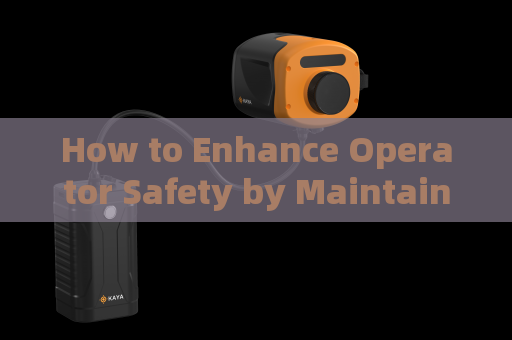
Further refinement in the field includes pairing the penetrating imager with a stabilized tripod or vehicle‑mounted platform for sustained observation. Operators can feed the video into a portable command display for real‑time threat assessment by multiple team members. Since the system operates purely in the optical domain—using laser illumination and gated imaging—it poses no health or safety concerns associated with ionizing radiation or radio waves. Its effectiveness against vehicle glass, airplane windows, and glass curtain walls makes it an ideal tool for building‑entry or aviation‑security scenarios as well, all while keeping personnel at a safe standoff. By converting a historically vulnerable moment—the vehicle approach—into a remote, data‑driven decision point, the penetrating imager directly enhances operator safety through the disciplined maintenance of secure operational distances.




